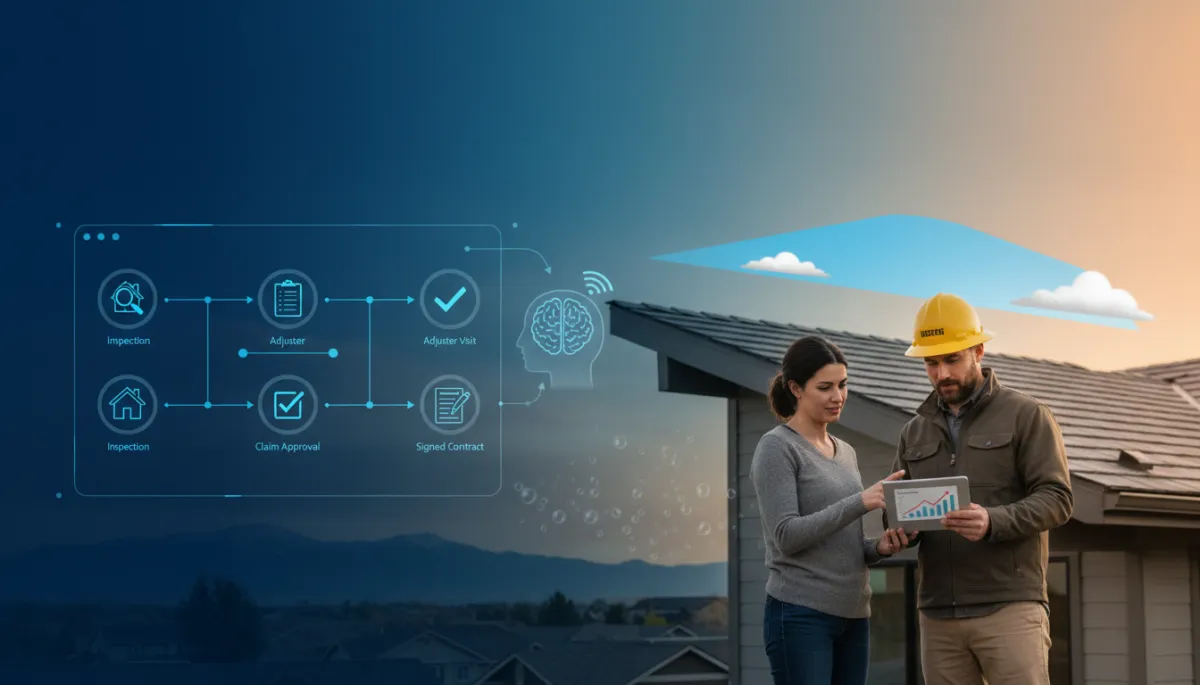
AI in Roofing Insurance: Boost Claim Success
Roofing, Insurance Claims, AI Follow-Up
Roofing Insurance Claim Navigation: How AI Helps Contractors Guide Homeowners to Sign
Roofing contractors working insurance storm jobs know the real battle often starts after the inspection. This article explains how AI-powered follow-up from tools like Instant Business Pro (IBP) keeps homeowners engaged through every step of the roofing insurance claim navigation process, reduces drop-off, and helps you close more storm damage jobs with less manual chasing.
Why Do So Many Roofing Insurance Leads Go Cold After a Great Inspection?
You climb the ladder, document the hail damage, educate the homeowner, and leave them with photos and a clear recommendation. They nod, say they appreciate your honesty, and promise to “call the insurance company and get back to you.” Then the silence starts. Days pass. You follow up once or twice. Suddenly you see a different company’s sign in the yard.
This is the core problem of roofing contractor insurance follow-up: the homeowner is thrown into a confusing, slow insurance process. They are unsure what to say to the carrier, how the adjuster visit works, or what happens after the claim is approved. While they hesitate, competitors who follow up consistently and clearly often win the job—regardless of who did the better inspection.
📌 Key Takeaway: Most lost storm jobs are not lost on the roof; they are lost in the gaps between inspection, adjuster visit, and claim approval.
What Is the Real Cost of Losing 30% of Storm Inspections to Better Follow-Up?
Consider a typical hail season for a small to mid-sized roofing company focused on insurance work. You and your reps might perform 150–300 storm inspections across a season. Many contractors assume “that’s just the game” when 25–35% of those inspected jobs never turn into signed contracts with their company—even when damage is clearly present and the homeowner was interested at the door.
Let’s put real numbers to that drop-off. Assume:
Average approved storm roof job value (revenue): $12,000–$18,000 per home
150 inspected homes with valid hail damage in a season (conservative for an active area)
30% of those inspected homes end up signing with a competitor because they followed up better during the insurance claim process
That is 45 lost jobs. At a modest $12,000 per job, that is $540,000 in gross revenue. Even if only 10–30% of that would have been net profit to your company, you are realistically leaving $50,000–$200,000+ per hail season on the table simply because a competitor stayed in front of the homeowner more consistently while the claim crawled forward.
⚠️ Warning: If you are not tracking how many inspected roofs become signed contracts, you may be underestimating the cost of weak follow-up by six figures or more.
How Can AI Follow-Up Help Homeowners Navigate the Roofing Insurance Claim Process?
AI-powered systems like Instant Business Pro are designed to keep your company “in the room” with the homeowner even when you are not physically there. Instead of relying on memory, sticky notes, or a salesperson’s energy level, AI follow-up sequences automatically guide homeowners through each step of the roofing insurance claim navigation journey:
Immediately after inspection: An automated text and email recap the findings, include photos or a link to a gallery, and outline the next step—usually contacting the insurance carrier to open a claim. The message can be personalized with the rep’s name and company branding, but triggered automatically by IBP when the lead is moved to “Inspection Completed” in your pipeline.
Before and after the adjuster visit: AI sends reminders about the adjuster appointment, explains what to expect, and reinforces why having you present is important. After the visit, the homeowner receives a follow-up asking how it went and offering to review the estimate with them—without your team having to remember to call every single time.
After claim approval: As soon as the homeowner mentions approval or uploads documentation, IBP can trigger a sequence that explains the build schedule, supplements, upgrades, and signing the contract. It can even include a link to an e-sign agreement so that the homeowner can move forward the same day they receive their paperwork.
Throughout this process, AI can answer common questions via SMS, email, or web chat—such as “What happens if the adjuster misses damage?” or “How does depreciation work?”—drawing on pre-written, contractor-approved responses. This reduces confusion, builds trust, and positions you as the guide, not the pest who keeps “checking in.”
What Does AI-Powered Roofing Insurance Follow-Up Look Like in Practice?
Instant Business Pro’s AI follow-up and lead nurturing tools are built around real-world contractor workflows. Instead of forcing your team to learn a complicated system, IBP mirrors the stages you already use in your storm pipeline and automates communication around them. A typical storm damage workflow might include:
Lead created: Whether from door knocking, inbound web leads, or a missed call text back campaign, the homeowner enters your CRM with basic contact information and notes about the damage or storm date.
Inspection scheduled and completed: IBP automatically sends appointment reminders, then kicks off a post-inspection sequence with photos, next steps, and a clear explanation of how to file the claim. Your rep can trigger this from their phone in seconds.
Claim filed and adjuster visit set: Once the homeowner confirms the claim number or adjuster date, IBP moves them to the next stage and launches targeted messages: what documents to have ready, why you should attend, and how to handle any pushback from the carrier.
Claim approved or partially denied: AI sequences explain supplements, code upgrades, and options to appeal. They encourage the homeowner to schedule a review call with your team, using automated booking links so you are not playing phone tag.
Contract signing and build: Once the homeowner is ready, IBP can send e-sign contracts, payment reminders, and pre-install instructions—keeping communication professional and predictable all the way through final inspection.
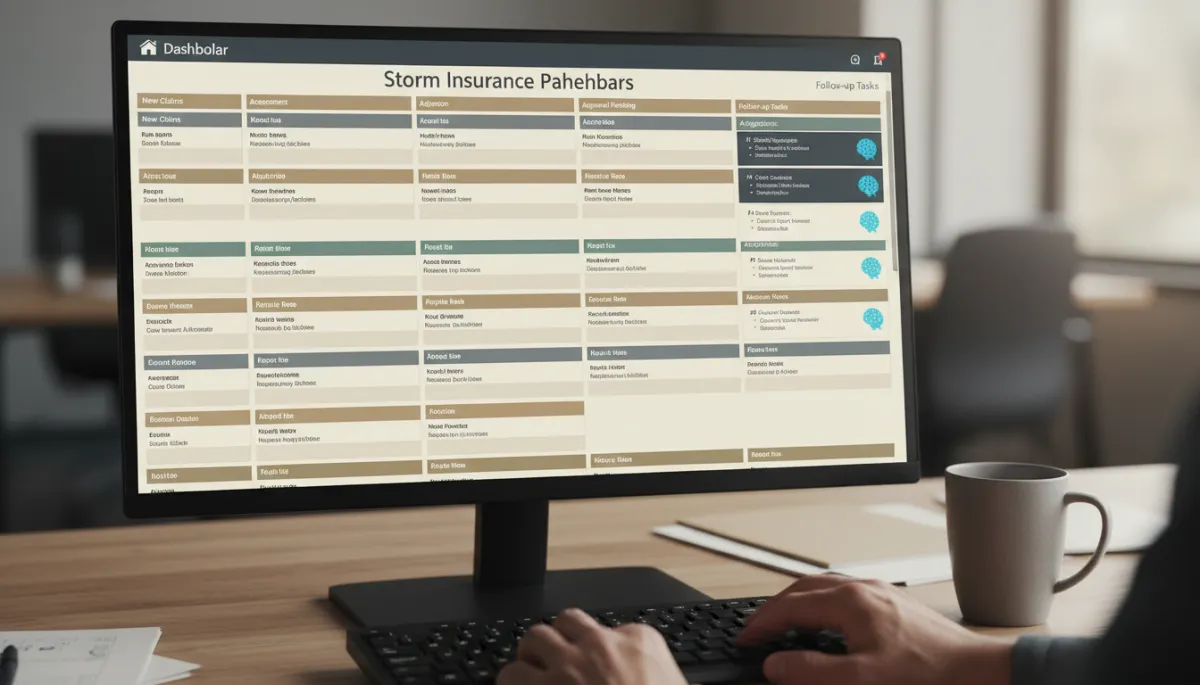
Structured AI follow-up turns every insurance claim stage into a clear, guided step.
How Does AI Reduce Drop-Off Between Inspection and Signed Contract?
The most painful gap for storm-focused roofers is between “Yes, I want you to look at my roof” and “Yes, I am signing your contract.” AI narrows that gap by removing the two biggest reasons homeowners disappear: confusion and inconsistency.
Confusion: Homeowners do not speak insurance. They are afraid of saying the wrong thing on the phone, worried about premium increases, and unsure if the carrier will really pay for a full replacement. AI follow-up educates them in small, timely messages tailored to where they are in the process, so they never feel left alone with the jargon.
Inconsistency: Sales reps are human. They get busy, tired, or distracted by new storms. AI never forgets to send the follow-up text, email, or voicemail drop. Every homeowner receives the same high-quality sequence, regardless of which rep knocked the door or how many other inspections are on the calendar.
Over time, this consistency compounds. Even a modest increase in conversion—say from 40% of inspected roofs signed to 55%—can translate into dozens of additional jobs per season. And because AI is doing most of the heavy lifting, your team can spend more time on high-value conversations instead of repetitive check-ins.
How Can AI Help Roofing Contractors Close More Storm Damage Jobs Each Season?
Closing more storm damage jobs is not just about generating more leads; it is about squeezing more value out of the leads you already have. AI tools like IBP combine follow-up, nurturing, and smart routing so fewer opportunities slip through the cracks. Some practical examples include:
Instant response to inbound interest: If a homeowner calls after seeing your yard sign or a social post and you miss the call, IBP’s missed call text back feature can immediately send a message acknowledging the call and inviting them to schedule an inspection. This prevents hot leads from calling the next roofer on Google.
Smart lead nurturing for “not yet ready” homeowners: Some property owners want to “wait and see” after a storm or talk to their spouse. IBP can place them into a nurturing campaign that periodically shares educational content about hail damage, deadlines, and local storm statistics—especially powerful in markets like Colorado where hail is a yearly reality.
Automatic reactivation of old storm leads: When a new storm hits the same area, IBP can identify past leads in the affected ZIP codes and trigger outreach to check if they experienced new damage or never completed their previous claim. This “second chance” strategy can add significant revenue without knocking a single new door.
When combined with disciplined sales practices and solid production, AI-driven roofing insurance AI follow-up becomes a multiplier on every hail season you work.
What Does the ROI of AI Follow-Up Look Like in a Colorado Front Range Hail Season?
Colorado’s Front Range—from Fort Collins through Denver to Colorado Springs—is one of the most hail-prone corridors in the country. In 2026 alone, by mid-June, the state had already recorded 135 hail reports, with major events impacting tens of thousands of properties along the I‑25 corridor and surrounding suburbs. June 8, 2026, for example, saw nearly 100,000 properties hit by hail of 1.0 inch or larger, with over 27,000 properties experiencing 1.75 inch or larger stones, according to HailTrace data.
For a roofing contractor operating in the Front Range, that kind of activity translates into a large volume of potential inspections—but also fierce competition. Let’s walk through a simple ROI scenario for AI-powered follow-up in this environment:
You complete 200 storm inspections across a hail season in Denver, Aurora, and Colorado Springs neighborhoods impacted by 1.0–2.0 inch hail.
Without structured follow-up, you sign 40% of those into contracts: 80 jobs. At an average revenue of $15,000 per job, that is $1.2 million in storm revenue.
With IBP’s AI follow-up and nurturing sequences in place, you increase your inspection-to-contract conversion to 55%. That is 110 jobs instead of 80—30 additional roofs.
Thirty extra storm jobs at $15,000 each equals $450,000 in additional revenue from the same number of inspections. Even if your net profit per job is only 15–20%, that is $67,500–$90,000 in extra profit generated primarily by better follow-up and claim navigation support—not by spending more on leads or adding more reps.
💡 Pro Tip: Compare your current inspection-to-contract rate with a realistic target (e.g., +10–15 percentage points). The gap between those two numbers is your AI follow-up opportunity for the next hail season.
How Do IBP’s AI Follow-Up and Lead Nurturing Tools Fit Into Your Roofing Business?
Instant Business Pro is built specifically to help service businesses like roofing companies capture, nurture, and close more jobs with automation. For storm-focused contractors, several capabilities are especially valuable:
AI follow-up sequences: Pre-built yet customizable campaigns that trigger at key insurance milestones—inspection completed, claim filed, adjuster scheduled, claim approved, supplements requested—so homeowners receive the right message at the right time, every time.
Lead nurturing and reactivation: Long-term drip campaigns for undecided homeowners and past storm leads, keeping your brand top-of-mind when the next storm hits or when they finally decide to move forward on repairs.
Unified communication: Centralized SMS, email, and call tracking so your team can see every interaction in one place and avoid duplicate outreach or missed follow-ups. This is especially useful when multiple reps are working the same subdivision or HOA.
IBP offers different tiers—such as entry-level plans for smaller roofing teams, growth-focused packages for companies scaling across multiple crews, and advanced tiers with deeper automation and reporting. While each tier adds capabilities, they all share the same core goal: help you capture more value from every storm through smarter, automated roofing insurance AI follow-up and nurturing.
To see how features like AI sequences, pipeline automation, and the missed call text back system can plug directly into your current workflow, you can also explore related IBP resources such as their lead management and automation pages, as well as training content on building high-converting follow-up campaigns for home services.
How Can You Start Implementing AI Follow-Up in Your Roofing Insurance Process?
Moving from manual follow-up to AI-driven automation does not have to be overwhelming. A practical approach for roofing contractors is to start with the single biggest leak in your pipeline, then expand from there. For most storm-focused companies, that leak is the period immediately after inspection and before the claim is filed or the adjuster visits.
Map your current steps: Write down the exact stages a homeowner goes through from first contact to final check. Note where you often lose them—no-show inspections, never-filed claims, homeowners who “ghost” after adjuster day, and so on.
Choose one or two stages to automate first: Common starting points include post-inspection education and pre-adjuster reminders. These are high-impact and easy to standardize with AI.
Build clear, homeowner-friendly messages: Use plain language, avoid insurance jargon, and focus on what the homeowner should do next and why. IBP’s templates and AI assistance can help you create these quickly and refine them over time based on response rates.
Connect triggers to your pipeline: Set up your CRM stages so that when a rep moves a lead to “Inspection Complete,” the correct AI sequence starts automatically. The same applies when an adjuster date is added or a claim is marked approved.
Once you see the impact—more callbacks, faster claim filing, and higher contract rates—you can expand automation to other parts of your process, such as no-show rebooking, supplement education, and referral requests after a successful build.
What Outcomes Can Roofing Contractors Expect from AI-Driven Insurance Claim Navigation?
Contractors who fully embrace AI-powered roofing insurance claim navigation typically see improvements in three key areas:
Higher conversion from inspection to signed contract: By reducing confusion and staying in touch at every stage, more homeowners follow through with you instead of drifting to competitors. Even a 10–15 point increase in conversion can transform your hail season revenue.
More storm jobs closed per season: Because AI handles much of the routine communication and follow-up, your reps can run more inspections without sacrificing quality. That means more opportunities at the top of the funnel and better conversion in the middle—compounding results year after year.
Less time chasing leads manually: Instead of spending hours each week dialing unresponsive homeowners or rewriting the same explanation texts, your team can focus on high-value conversations—meeting adjusters, negotiating supplements, and closing deals at the kitchen table.
Over time, this shift changes the way your business feels during storm season. Instead of scrambling reactively, you operate from a structured, proactive system where every homeowner receives expert guidance and every lead is worked thoroughly and consistently.
How Can You Take the Next Step Toward AI-Powered Roofing Insurance Follow-Up?
If you are a roofing contractor doing insurance storm work—especially in active markets like Colorado’s Front Range—the question is no longer whether AI will impact roofing insurance claims. It is whether you will be the company using AI to guide homeowners confidently from inspection to install, or the company losing signed contracts to competitors who do.
Exploring a platform like Instant Business Pro is a practical way to start. With AI follow-up sequences, lead nurturing tools, and features like missed call text back, IBP is designed to help roofing contractors capture more value from every storm without adding more chaos to their day. You can begin by automating just one part of your process—such as post-inspection communication—and expand as you see measurable results in your close rates and storm-season revenue.
The storms will keep coming. Homeowners will keep filing claims. The contractors who win the most jobs will be those who make the insurance process feel simple, safe, and guided. AI-powered roofing insurance claim navigation gives you the tools to be that contractor—consistently, at scale, season after season.
