Emergency Service Marketing: Win Urgent Jobs Fast
Emergency Service Marketing, Home Service Contractors, AI Automation
Emergency Service Marketing: How Contractors Win Urgent Jobs Before Competitors Answer
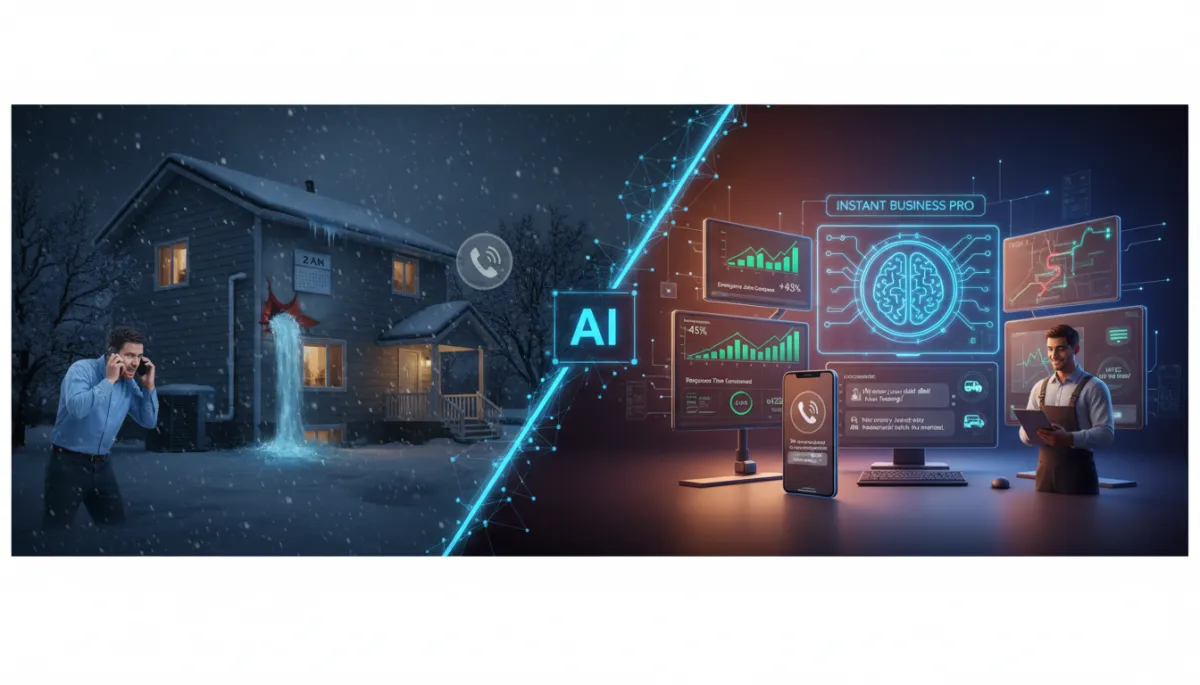
When a pipe bursts at 2 AM or a furnace dies in a Colorado blizzard, homeowners are not price shopping — they are calling the first contractor who responds. In 2026, the contractors consistently winning these high‑value emergency jobs are not always the biggest brands; they are the ones using AI, automation, and 24/7 response systems to answer every urgent inquiry within seconds, even while they sleep or work on another job.
Why do homeowners with emergencies call the first contractor who responds?
In a true emergency — a burst pipe flooding a basement, a failed furnace in sub‑freezing temperatures, or a tripped electrical panel leaving a family in the dark — homeowners are in crisis mode. They are not reading every Google review or comparing three estimates. They search “emergency plumber near me” or “24/7 HVAC repair,” tap the first few listings, and stick with whoever responds first in a calm, professional manner and offers a clear next step.
For HVAC, plumbing, electrical, and roofing contractors, this behavior creates a simple but brutal rule of emergency service marketing for contractors — speed wins. If your phone rings and nobody answers, that homeowner moves on within seconds. If they submit a form and wait more than a few minutes, they are already talking to your competitor. The contractor with a true 24/7 response — not just a promise on a website — captures the job and the revenue.
What is the real problem with missed emergency calls for contractors?
Most home service contractors are not losing emergency work because they lack skills or licenses — they are losing it because they simply do not answer in time. Phones ring while techs are under a sink, on a roof, or driving between jobs. After hours, calls roll to voicemail or a basic answering service that “takes a message” but does not actually engage the homeowner or book the job on the spot.
A burst pipe at 11:47 PM — homeowner calls three numbers, leaves one voicemail, and books with the first contractor who texts back with availability and pricing guidance.
A failed furnace in January — homeowner fills out a “contact us” form, but the office does not see it until 8:15 AM. By then, the job is already scheduled with someone else.
A tripped panel and partial outage — homeowner calls during business hours, but your team is tied up on other calls. No answer, no text‑back, no job.
In each case, the contractor who could have done the work never even knew the opportunity existed. The marketing did its job — the homeowner found you — but the response system failed. That is the gap modern AI‑powered tools are designed to close.
📌 Key Takeaway: Emergency demand is not the problem — the real problem is that most contractors’ phones and forms are not equipped to respond instantly when it matters most.
How much revenue do missed emergency calls really cost your business?
Emergency jobs are some of the highest‑value opportunities in home services. Whether it is a plumbing emergency, a no‑heat call, an electrical hazard, or storm damage to a roof, these projects are urgent, necessary, and often lead to longer‑term relationships and upsell work. Industry‑wide, emergency tickets commonly range from $500 to $5,000+, depending on scope and trade.
Now apply that to missed calls. If your business misses even 3–5 emergency inquiries per week — calls that go to voicemail, forms that sit unanswered, or after‑hours texts that never get a reply — the math adds up quickly:
Low estimate: 3 missed jobs × $500 average ticket × 4 weeks ≈ $6,000/month in lost revenue.
Realistic mid‑range: 4 missed jobs × $1,500 average ticket × 4 weeks ≈ $24,000/month.
High‑value mix: 5 missed jobs × $1,500–$5,000+ average ticket × 4 weeks ≈ $30,000+/month left on the table.
And that only reflects the immediate job. Emergency calls often reveal deeper issues — aging systems, code violations, undersized equipment, or neglected maintenance. A burst pipe can turn into a full repipe. A failed furnace can lead to a complete system replacement. A temporary roof patch can convert into a full reroof once insurance is involved. Each missed call is not just one lost ticket; it is potentially years of lifetime value gone to a competitor.
💡 Pro Tip: Before you invest another dollar in ads, calculate your current missed‑call rate. Fixing response speed can generate more revenue than increasing lead volume.
How can AI-powered missed call text-back save emergency leads automatically?
The fastest way to plug this revenue leak is to make sure every missed call triggers an instant, automated, professional text‑back. This is exactly what the Instant Business Pro (IBP) Missed Call Text‑Back system is designed to do for contractors.
A homeowner calls your main number, but you are on a roof or with another customer — the call goes unanswered.
Within seconds, IBP automatically sends a personalized text: “Hi, this is [Your Company]. We just missed your call — are you dealing with an emergency plumbing, HVAC, electrical, or roofing issue? Reply here and we’ll help right away.”
The homeowner replies, explains the issue, and your AI‑driven workflow collects key details — address, photos, urgency level — and can even offer available time windows or connect them to your on‑call tech.
Instead of a dead end, every missed call becomes a two‑way conversation. This simple shift dramatically increases your chances of winning urgent jobs because homeowners feel heard, see that you are responsive, and stop dialing down the list. For after‑hours contractor leads, this can be the difference between an empty schedule and a fully booked emergency crew.
You can learn more about how this works in practice on the IBP Missed Call Text‑Back page here: https://instantbusinesspro.ai/missed-call-text-back.
What does a 24/7 AI receptionist do for emergency service contractors?
A missed call text‑back is powerful, but the next level is a 24/7 AI receptionist that can hold full conversations, qualify leads, and even book appointments. IBP’s AI Receptionist (Tier 3 Virtual Office) is built specifically for service businesses that need reliable after‑hours coverage without hiring a full overnight staff or outsourcing to a generic call center.
Answers calls and website chats 24/7 with a branded greeting that matches your company’s tone and services.
Uses natural language processing to understand “my basement is flooding,” “my breaker keeps tripping,” or “my heater just stopped” and routes accordingly.
Asks structured questions — location, photos, type of system, access instructions — so your techs arrive prepared.
Books jobs directly onto your calendar or dispatch board, following your on‑call rules and service areas.
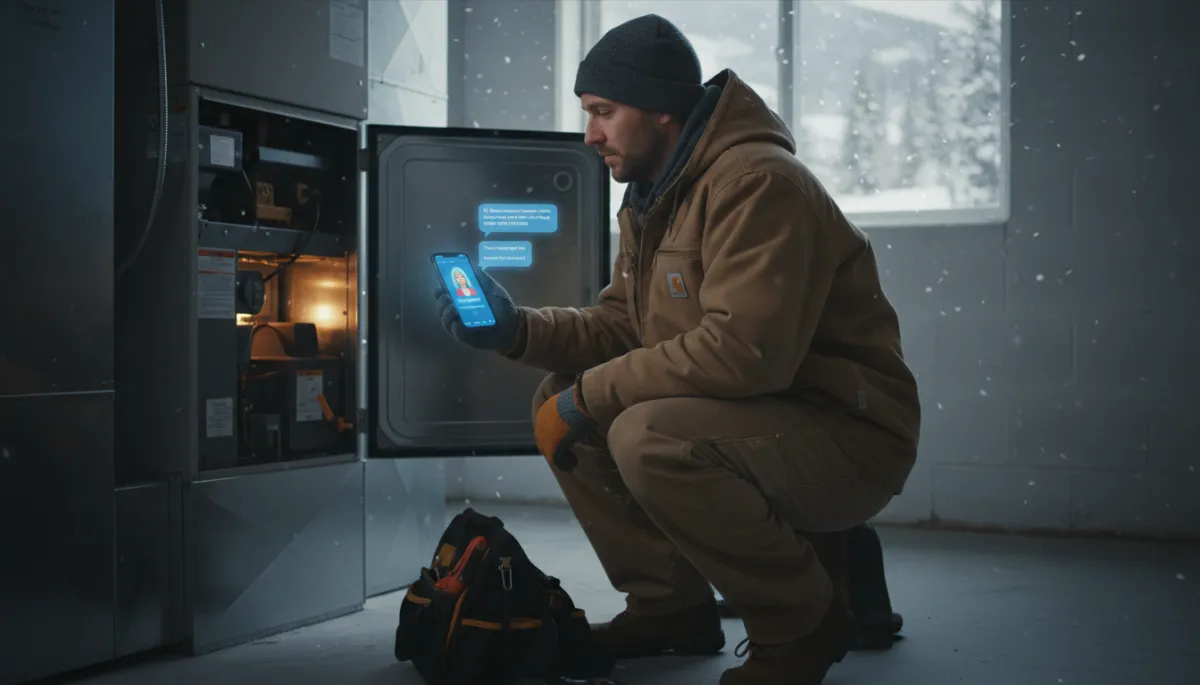
AI receptionist workflows keep techs busy with booked jobs instead of chasing missed calls.
Because the AI Receptionist is always on, your promise of “24/7 emergency service” becomes operational reality. Homeowners experience immediate engagement, not voicemail. Your team receives clear, structured job details instead of half‑heard messages. And your brand becomes known as the contractor who actually answers at odd hours — not just the one who advertises it.
IBP’s Tier 3 Virtual Office is designed to integrate with the rest of your automation stack, including missed call text‑back and lead routing. You can explore how these tiers fit together across the IBP platform, starting from the missed call text‑back overview at Instant Business Pro.
How does instant lead response and lead recovery protect your marketing spend?
If you are running Google Ads, Local Services Ads, SEO, or direct mail to generate emergency calls, every lead you do not respond to is wasted marketing budget. Research across industries shows that contacting a new lead within five minutes dramatically increases conversion rates — after 10–15 minutes, the odds of connecting and booking drop sharply as prospects move on to the next provider.
IBP’s Lead Recovery tools are built to make sure no form fill, web chat, or ad‑driven call falls through the cracks. When a homeowner submits an emergency request online, the system can:
Send an instant confirmation text and email acknowledging the issue and setting expectations for response time.
Trigger a call or text from the AI Receptionist to gather more details and attempt to book immediately.
Follow up automatically if the homeowner does not respond, increasing your contact rate for after‑hours contractor leads.
This kind of instant lead response ensures that your emergency service marketing for contractors is not just generating clicks and impressions — it is generating booked jobs. To see how IBP connects missed call text‑back, AI Receptionist, and lead recovery into one workflow, you can explore additional resources from the main platform, starting again from IBP’s missed call solution.
What does the ROI of AI and automation look like for emergency services?
Evaluating ROI is straightforward when you frame AI reception and automation as revenue recovery tools rather than “extra software.” You are already paying for phones, staff, vehicles, and marketing. The question is how much more revenue you can generate by making sure every urgent inquiry gets a response within seconds.
Consider a conservative HVAC or plumbing shop:
Average emergency job value: $1,200 (mix of service calls and small replacements).
Current missed emergencies: just 2 per week (often unnoticed).
Monthly lost revenue: 2 × $1,200 × 4 weeks = $9,600.
If AI‑powered missed call text‑back, AI Receptionist, and lead recovery workflows help you capture even half of those previously lost jobs, that is roughly $4,800/month in recovered revenue. Many contractors see even higher lifts once they tighten their entire response process and market “fastest emergency response” confidently on their website and ads.
📌 ROI Snapshot: Recovering 3–5 emergency jobs per month often covers your automation investment several times over — everything after that is margin.
When you factor in lifetime value — future replacements, maintenance plans, and referrals from satisfied emergency customers — the return on a robust 24/7 response system is typically measured not in percentages, but in multiples of your investment.
How does this play out in a real Colorado winter HVAC emergency scenario?
Picture a small HVAC contractor based in Colorado Springs. It is late January, temperatures are in the single digits, and a cold front is stretching every local provider thin. At 1:32 AM, a homeowner’s 18‑year‑old furnace fails. The house is dropping below 60 degrees, and there are kids sleeping upstairs. The homeowner grabs their phone and searches “emergency furnace repair Colorado Springs.”
They tap three results:
Contractor A — phone rings, then voicemail. No text‑back, no chat.
Contractor B — “24/7 emergency” on the website, but only a generic contact form. No immediate response.
Contractor C — your company, running IBP AI Receptionist (Tier 3 Virtual Office) with missed call text‑back and lead recovery.
When the homeowner calls Contractor C, the AI Receptionist answers immediately with a calm, branded greeting. It confirms that you handle “no‑heat emergencies,” asks for the address, and gathers details about the system. It explains that an on‑call technician will review the case and provides a clear ETA window. Simultaneously, your on‑call tech receives a notification with all the collected data and a direct text thread with the homeowner.
Within minutes, the job is booked. The homeowner stops calling other contractors because they feel taken care of. Your tech arrives, restores heat, and identifies that the system is near end‑of‑life. Over the next week, that emergency call turns into a full furnace replacement and a maintenance agreement — all because your emergency service marketing for contractors was backed by real‑time, AI‑driven response.
How does faster response build your reputation as the contractor who always shows up?
In emergency work, reputation is built less on clever slogans and more on lived experience. When homeowners discover that you actually answer at 2 AM, that you text back within seconds of a missed call, and that you follow through on your promised arrival windows, they remember — and they tell others. Reviews start to include phrases like “they picked up right away,” “they texted back in under a minute,” and “they were the only contractor who answered in the middle of the night.”
More emergency jobs captured because you are first to respond, not first in the phone book.
Faster response than competitors, giving you a consistent edge even in crowded markets.
A reputation as the contractor who always shows up when it matters, which drives referrals and repeat business.
Over time, this reputation becomes one of your strongest marketing assets. It amplifies all of your other efforts — SEO, ads, yard signs, trucks — because prospects have already heard that your company is the one that actually answers in an emergency. AI and automation are simply the infrastructure that makes that promise reliable and scalable.
How can you start using AI and automation to win more urgent jobs today?
You do not need to overhaul your entire tech stack overnight to benefit from AI‑driven emergency response. For most HVAC, plumbing, electrical, and roofing contractors, a phased approach works best:
Start with missed call text‑back. Ensure every unanswered call triggers a friendly, branded text within seconds. This alone can recover a surprising number of urgent jobs. Learn how at IBP Missed Call Text‑Back.
Add AI Receptionist (Tier 3 Virtual Office). Once you see the impact of faster responses, layer in a 24/7 AI receptionist to answer calls, qualify emergencies, and book jobs around the clock.
Activate Lead Recovery workflows. Connect your forms, ads, and web chats so every emergency inquiry receives instant follow‑up and multiple contact attempts until resolved.
Together, these tools transform your business from “we try to answer fast” to a truly always‑on, contractor 24/7 response operation that can compete with much larger brands — and often beat them — simply by being first to respond and first to reassure homeowners in crisis.
What is your next step toward winning more emergency jobs before competitors answer?
If emergency and urgent work is already part of your service mix, you are likely closer than you think to a significant revenue lift. The calls are already coming in — the question is how many you are actually capturing. By combining AI‑powered missed call text‑back, a 24/7 AI Receptionist, and intelligent lead recovery, you can turn your existing marketing and phone number into a true emergency response engine that works even when your team is off the clock.
If you are ready to explore how these tools could fit your HVAC, plumbing, electrical, or roofing operation — whether you are in Colorado facing harsh winters or in a milder market with storm and flood seasons — take a few minutes to review how IBP’s missed call and AI receptionist solutions work in real contractor environments at Instant Business Pro. From there, you can decide whether a gradual rollout or a full Tier 3 Virtual Office approach makes the most sense for your business and your growth goals.
You do not have to outspend your competitors to win more urgent jobs — you simply have to out‑respond them. AI and automation give you the tools to do exactly that, consistently, and profitably.
