Manage Storm Surge Leads Without Losing Them
Home Services, Lead Management, Contractor Storm Surge Lead Capture
How Colorado Roofers and Restoration Contractors Manage Storm Surge Leads Without Missing a Single Call or Callback
How home service contractors can capture every storm-driven lead — even when phones melt down and call volume spikes 8–12x overnight.
7 AM After the Storm: Your Lines Are Blowing Up — and Leads Are Leaking Out
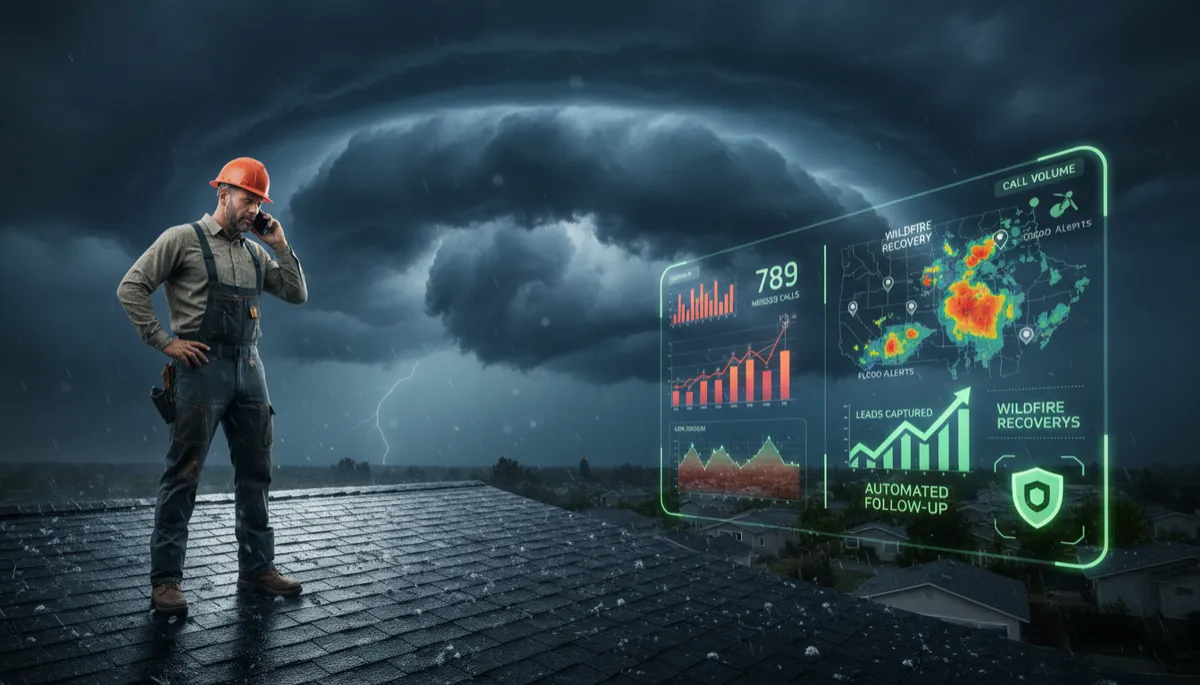
It is 7 AM the morning after a major hailstorm. Your trucks are still parked, your first crew is pouring coffee, and your office line is already stacked with voicemails. Roofing calls are coming in 8–12x your rolling average for the last month — a pattern we now see across markets after severe hail. Homeowners are staring at shredded shingles, cracked skylights, and leaking ceilings. Every roofer in town has a phone ringing off the hook, and nobody has enough people to answer them all in real time.
This is contractor storm surge lead capture in the real world — not a spreadsheet scenario. When storms, heat waves, wildfires, and floods all hit in the same season, most shops lose half their opportunities before anyone even says hello. The contractors with a surge-ready system win the day. The ones relying on phones alone donate revenue to competitors.
What Storm Surge Demand Really Is — and Why It Is Different from “Busy Season”
Storm surge demand is the short, brutal window when event-driven calls spike several times above normal and overwhelm every manual process you have. It is not just “a busy week.” It is a 48–72 hour crush where inbound demand jumps 4–12x, callers are in distress, and speed-to-response decides who wins the job. For contractor storm surge lead capture, the question is simple — can you capture every lead during those extreme days, or do they roll to voicemail and vanish?
Industry-wide, even under normal conditions, 27–62% of contractor calls go unanswered. During surge events, that failure rate gets worse just as the opportunity spikes. At the same time, 85% of missed callers never call back, and 78% of homeowners hire the first business that responds. The first to respond wins — yet the average contractor callback delay is 4.2 hours, by which point 67% of those homeowners have already booked a competitor.
The Four Surge Events Hitting Contractors in 2026 — and How Hard They Spike Call Volume
September 2026 is a perfect storm. We are seeing late-season heat, wildfire recovery, western flood events, and peak tropical storm activity all at once. The National Interagency Fire Center held the country at National Preparedness Level 5 — the highest tier — on August 24, 2026, with 7.74 million acres burned year-to-date. That level of wildfire activity is driving multi-trade demand surges in roofing, exterior cleaning, electrical, restoration, and more, from Colorado to California and beyond.
Trade | Trigger Event (2026 Surge Pattern) | Typical Call Spike Multiplier |
|---|---|---|
Roofing | Hailstorms and wind-driven tropical systems | 8–12x rolling average for 72 hours (roofing leads after hailstorm) |
HVAC | Late-season heat waves and humidity spikes | 4–6x normal volume (HVAC surge demand) |
Restoration & Mitigation | Wildfire smoke, structure damage, and post-fire flooding | 3–5x baseline inbound requests |
Plumbing, Drain, & General Contractors | Flash floods, backed-up storm drains, and seasonal river flooding | 2–4x normal call volume during flood events |
Most contractor shops are staffed for the average week — not the extreme week. That is fine when the phone rings steadily. It is fatal when your market is on fire, literally and figuratively, and every inbound call is a high-intent buyer ready to book now.
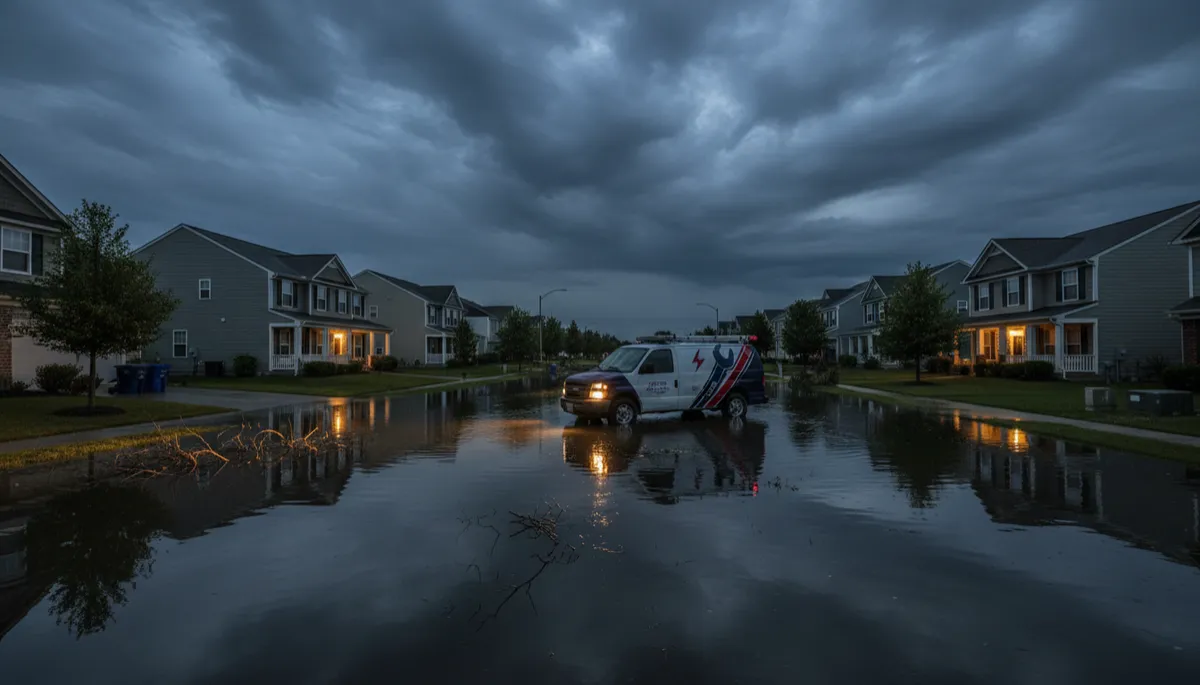
Flood and storm events can multiply inbound calls overnight across several trades.
Why Phones Alone Cannot Handle Surge Volume — and What the Math Really Costs You
During normal weeks, your office staff can keep up — mostly. During missed calls during storm season, the math turns brutal. Imagine a roofing office that normally handles 30 calls a day. After a hailstorm, they see an 8–12x spike for 72 hours. That is 240–360 calls a day, landing on the same two or three people who were hired for a 30-call day.
Even if your team works flat out, you still hit physical limits — only so many calls can be answered at once. With industry data showing 27–62% of contractor calls go unanswered under normal conditions, it is reasonable to project that during surge conditions you will miss well over half of your inbound attempts. Because 85% of those missed callers never call back, every ring that rolls to voicemail is essentially a lost job, not “a message we will return later.”
Now layer in homeowner behavior. 78% of homeowners hire the first business that responds. The average contractor callback delay sits at 4.2 hours, and by that point 67% of those homeowners have already booked a competitor. That means your carefully built reputation, your trucks, your licenses, your insurance — all of it loses to the company that simply responded faster, even if they are not better.
💡 Key takeaway: In storm surge conditions, phones alone turn into a bottleneck. Without an automated contractor storm surge lead capture system, you are effectively capping your own revenue and handing the rest to whoever picks up first.
The 72-Hour Window: When Storm Leads Go Cold — Fast
Roofing call volume after a hailstorm spikes 8–12x the rolling average for roughly 72 hours. Data from recent events show that the majority of storm-driven inquiries land in that three-day window. The same pattern holds for HVAC surge demand during heat waves, and for flood and wildfire recovery calls — the phones explode for a few days, then taper off sharply as homeowners lock in appointments and adjusters move on.
During those 72 hours, homeowners are not shopping for weeks. They are trying to solve a crisis — a leaking roof, a dead AC in 100-degree heat, a smoke-damaged home, a flooded basement. If you do not answer, they call the next contractor. If you call back four hours later, they are already booked. This is why missed call text back contractor workflows and automated follow-up are no longer “nice-to-have” — they are survival tools.
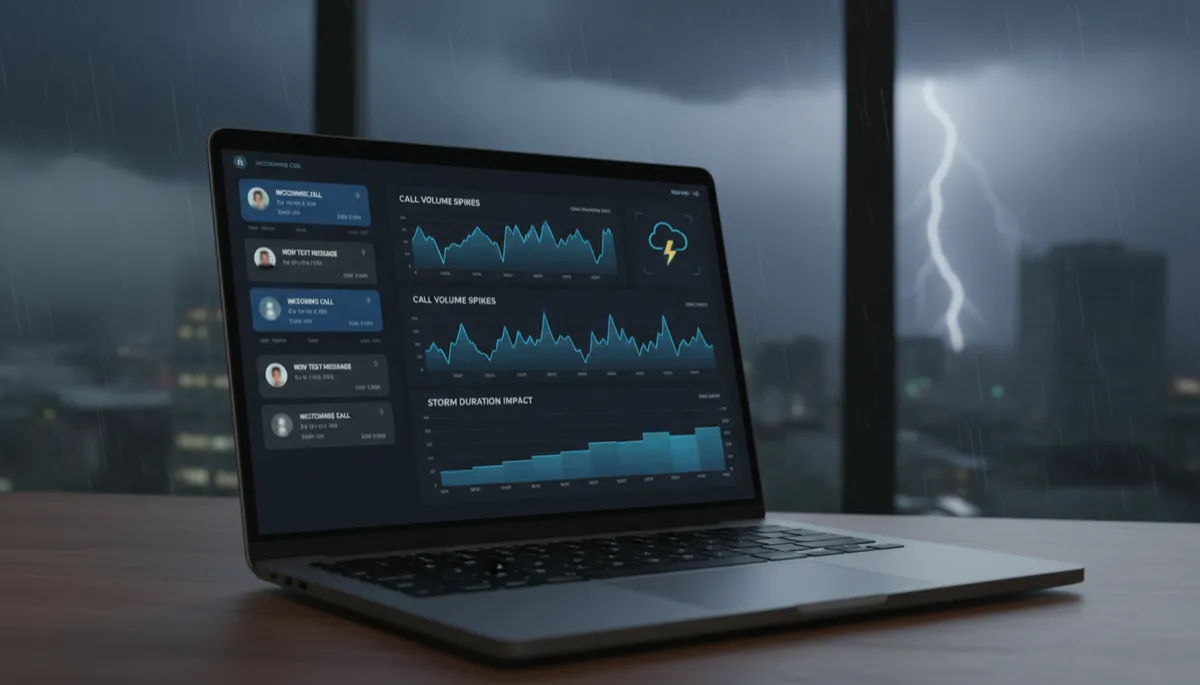
AI-driven missed-call recovery turns chaotic surge traffic into organized, bookable leads.
Six Steps to Build a Surge-Ready Lead Capture System Before the Next Storm Hits
Audit your current response reality. Pull a week of call logs from your phone system. Measure: answer rate, average time-to-answer, voicemail count, and callback delay. Then imagine those numbers under 4–12x volume. This is your starting gap for how to capture leads during high volume — not what you hope happens, but what will actually happen under stress.
Separate “phone answered” from “lead captured.” A true surge-ready system does not rely on a live human answering in real time. Every inbound call, missed call, web form, and chat should automatically create a lead record with name, address, service type, and urgency — even if nobody is free to pick up. This is where AI-driven tools, like those in IBP’s Growth Engine plan, become essential.
Deploy missed call text-back within seconds. When phones are slammed, you will miss calls — even with extra staff. A surge-ready system triggers an instant SMS like, “Sorry we missed you — this is Smith Roofing. Reply YES and we will lock in your spot today.” This missed call text back contractor workflow converts missed calls into active text conversations you can manage between jobs and from the field.
Standardize storm-specific intake questions. For roofing leads after hailstorm events, you need: address, roof type, visible damage, insurance status, and access notes. For HVAC surge demand, you need system age, symptoms, and whether there are vulnerable occupants in the home. Prebuilding these flows ensures every captured lead is inspection-ready, not just a name and number scribbled on a pad.
Route and prioritize automatically. Not every storm lead is equal. A smoke-damaged primary residence deserves a faster response than a detached garage. Your system should score and tag leads based on urgency, location, and trade, then route them to the right person — sales, dispatcher, or owner — without manual triage. IBP’s services are built to automate this routing across the home services trades we serve.
Prebuild follow-up sequences for the entire 72-hour window. Storm leads rarely convert on one touch. Your system should automatically follow up with unbooked leads via text and email over the next one to three days — confirming interest, offering inspection slots, and answering basic questions. This is where IBP’s Growth Engine plan shines, turning a single missed ring into a multi-touch conversion path while you and your crews are on roofs, in attics, or on flooded streets.
How IBP’s Growth Engine Plan Acts as Your Surge Buffer During Extreme Demand
Instant Business Pro (IBP) built the Growth Engine plan specifically for contractors who cannot afford to waste storm-driven demand. When phones melt down, Growth Engine does not replace your team — it surrounds them with an automated surge buffer that catches every lead, even when nobody can answer in the moment.
Automated lead capture from every channel. Calls, missed calls, web forms, and chat all flow into a single lead system, pre-tagged by trade and storm event. See how this works in the IBP case studies.
Missed-call recovery with instant text-back. When you cannot pick up, Growth Engine fires back a branded SMS within seconds, keeping that homeowner in your orbit instead of a competitor’s.
Automated follow-up sequences. Prebuilt outreach flows nurture leads over the full 72-hour storm window, booking inspections and estimates while you are in the field.
Trade-specific workflows. IBP supports a wide range of trades — roofing, HVAC, plumbing, restoration, and more — with intake logic tuned for each service line, including hail, heat waves, wildfires, and flood seasons in markets like Colorado and across the United States.
You can pair Growth Engine with IBP’s Digital Foundation plan, Virtual Office plan, or Growth Partner plan depending on how far you want to automate. The key is simple — during the next surge, you want AI capturing and organizing every opportunity while your people focus on serving homeowners.
No System vs. IBP Growth Engine During a Surge Event: Side-by-Side
Metric (72-Hour Storm Window) | Typical Contractor — No System | Contractor with IBP Growth Engine Plan |
|---|---|---|
Calls Answered Live | 38–73% (phones overwhelmed, staff capped by capacity) | 90%+ of callers engaged via live answer or instant text-back |
Leads Fully Captured (with contact + job details) | 30–50% (many voicemails lost or incomplete) | 85–95% captured across calls, missed calls, and web forms |
Average Time to First Response | 2–4.2 hours (manual callbacks, voicemail backlog) | Seconds to first SMS, minutes to booked inspection |
Revenue Recovered from Surge Leads | 40–60% of potential revenue captured, rest lost to competitors | 80–95% of addressable revenue captured, depending on capacity |
FAQ: Handling Storm Surge Lead Volume Without Losing Half Your Opportunities
Below are voice-search-friendly answers for owners asking how to protect their business during the next big event.
How can contractors handle missed calls during storm season?
You handle missed calls during storm season by separating “answering the phone” from “capturing the lead.” Use an automated system that instantly texts missed callers, collects their details, and logs them into a central lead hub. IBP’s Growth Engine plan does exactly this, so your crews can stay on the job while AI secures the next one.
What is the best way to capture roofing leads after a hailstorm?
The best way to capture roofing leads after hail is to assume an 8–12x call spike and build for it. That means automated intake for every channel, instant text-back for missed calls, and storm-specific questions that make it easy to book inspections quickly. A platform like IBP’s Growth Engine plan gives you that structure out of the box, tuned for roofing and other storm-driven trades.
How do I respond faster than competitors when my phones are slammed?
To respond faster than competitors, you need automation doing the first touch. Instant SMS replies, AI chat on your website, and prebuilt follow-up flows keep you in front of homeowners even when your team is on ladders or in crawl spaces. Because 78% of homeowners hire the first business that responds, shaving hours off your response time with automation is a direct revenue play.
Can a small contractor shop really compete during big storm events?
Yes — if you use technology to punch above your weight. Most shops are staffed for the average week, not the extreme week, which means even large competitors drop leads during surges. A surge-ready system like IBP’s Growth Engine plan lets a small team capture and organize more leads than a bigger company still relying on voicemail and manual callbacks.
How long does it take to set up a storm-ready lead capture system?
With IBP, most contractors go from sign-up to live in about 14–21 days. That includes configuring your trades, building storm-specific workflows, and connecting your phone and web channels. In other words, you can be ready before the next hailstorm, heat wave, wildfire, or flood event hits your market.
Where can I see pricing and options for IBP’s contractor plans?
You can review the Growth Engine plan alongside the Digital Foundation plan, Virtual Office plan, and Growth Partner plan on IBP’s pricing page. You can also explore additional free tools that support lead management and business growth between major events.
Capture the Next Surge — Before It Hits
Storm events, heat waves, wildfires, and flood seasons are not slowing down — and neither is the competition. The data is clear: call volume is spiking 4–12x during extreme events, 27–62% of calls go unanswered even on normal days, 85% of missed callers never try again, and 78% of homeowners hire the first contractor who responds. The first to respond wins, and the average 4.2-hour callback delay leaves most contractors losing that race before they even start.
You do not control the weather — but you can control whether your business is ready when it turns against your customers. To see how IBP’s Growth Engine plan can become your surge buffer, explore the Growth Engine plan, compare it to other tiers, and review real-world results in our case studies. When you are ready to protect your next 72-hour window, talk to the IBP team. We typically complete setup in 14–21 days — in plenty of time to be fully storm-ready before the next hailstorm, heat wave, wildfire, or flood hits your territory.
