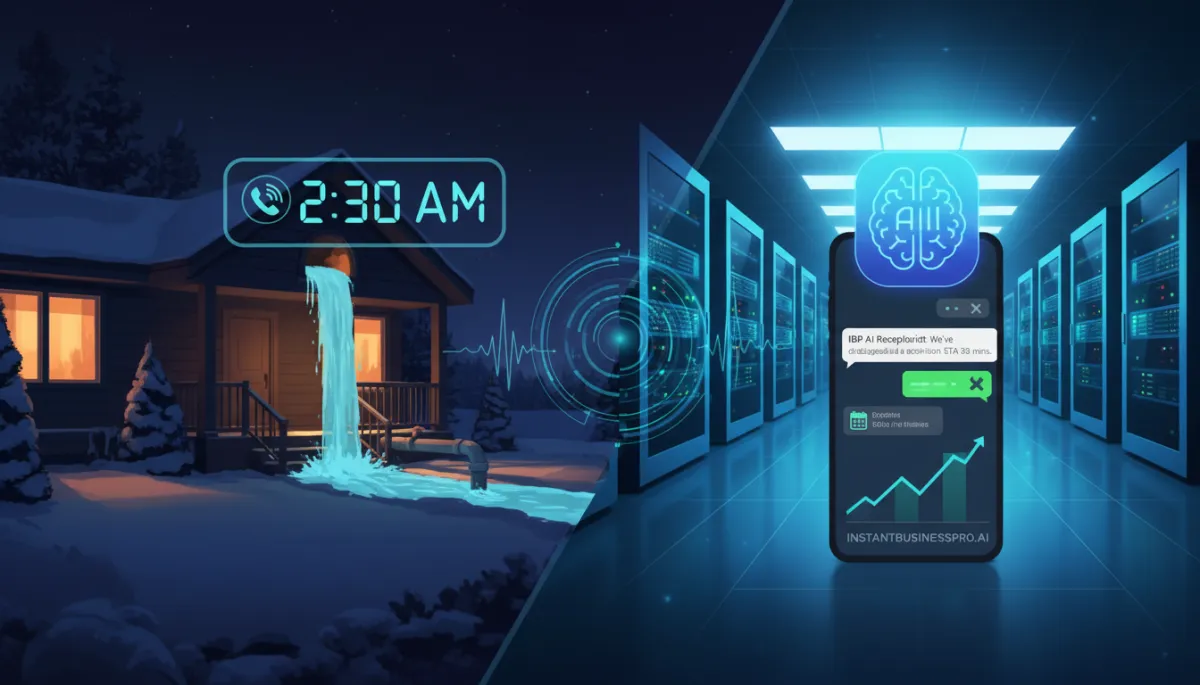
Plumbing After-Hours Emergency Marketing Tips
Plumbing Marketing, After-Hours Emergency, AI Automation
Plumbing After-Hours Emergency Marketing Tips
When a pipe bursts at 2 a.m. or a family wakes up to no hot water on a Sunday, they are not shopping around. They are desperately calling the first emergency plumber who actually responds. In 2026, the contractors winning these high-value jobs are using AI and automated response tools to answer instantly — even when the office is closed — and to turn every missed call into a booked job before competitors’ voicemails even finish playing.
Why do plumbing emergencies at 2 a.m. decide your whole year’s profit?
Most plumbing contractors already know that emergency work is the profit center. Industry data shows that 70–80% of plumbing jobs are urgent — burst pipes, sewage backing up, no hot water — and in many markets, 55–70% of paid-lead volume happens within 90 minutes of the problem starting. In those moments, homeowners are not comparing three quotes; they are trying to stop damage and protect their family and property.
The reality is simple: 78% of homeowners hire the first contractor who responds, and responding within about a minute can increase conversion by nearly 400%. Yet 40% of emergency calls happen in the evenings or on weekends, when many plumbing offices are closed or relying on basic voicemail and overworked answering services. The result is a huge disconnect between when leads come in and when humans are available to respond.
💡 Key point: In plumbing after-hours emergency marketing, the winner is not the cheapest or the biggest brand — it is the contractor who responds first, every time, 24/7.
What is the real cost of a missed emergency plumbing call?
It is easy to think of a missed call as an inconvenience. In emergency plumbing, it is usually a missed $500–$8,000 job. A burst pipe mitigation, a sewer line backup, or a failed water heater replacement can quickly reach four figures — especially when it involves drywall, flooring, and potential mold remediation partners downstream. When the phone rings and no one responds, that revenue goes directly to a competitor who answered faster.
Consider the math. If your average emergency ticket is a conservative $750 and you miss just 10 emergency calls per month, that is $7,500 in monthly revenue walking out the door. On the high end, a few sewer backups or slab leaks can easily push that figure to $40,000–$60,000 lost in a single busy season. Over a year, even modest assumptions line up with the range of $5,000–$80,000 in lost revenue annually from missed emergencies alone — not counting referrals, memberships, or repeat work that would have come from those customers.
📌 Key takeaway: Every missed after-hours emergency call is not just a lost job; it is a lost lifetime customer and lost recurring maintenance and replacement work.
How does AI capture emergency plumber leads 24/7 when humans cannot?
In 2026, leading plumbing contractors are closing this gap with AI-powered missed call text-back and 24/7 AI receptionists. Instead of hoping someone is free to answer, they install a system that responds automatically — by text and by conversational AI — every time the phone rings or a web lead comes in, day or night. This is the new foundation of plumbing after-hours emergency marketing.
1. AI missed call text-back: turning “lost” calls into live conversations
A homeowner dials your number. If your team cannot pick up within a few rings — maybe the office is closed, the lines are busy, or the tech is under a house — an AI system such as the IBP AI Missed Call Text-Back immediately sends a personalized SMS, usually within seconds. For example:
“Hi, this is [Your Plumbing Company]. We just missed your call. Are you dealing with an emergency like a burst pipe, no hot water, or a sewer backup? Reply YES and tell us what’s going on so we can help right away.”
That single automated message does three crucial things:
Confirms you are responsive — the homeowner immediately sees that your company is awake and paying attention, even if it is 2 a.m.
Invites a quick reply — most panicked customers will text back within seconds, giving you written details of the issue and location.
Opens a two-way conversation that your AI receptionist or on-call tech can step into and convert into a booked job.
2. IBP AI Receptionist (Virtual Office tier): your 24/7 emergency call triage and booking team
The next layer is a 24/7 AI receptionist, such as the IBP AI Receptionist on the Virtual Office tier from Instant Business Pro. This AI is trained specifically for home-services conversations. It does not just send one message — it holds a complete conversation with the customer in natural language, by text or web chat, any time of day or night. For after-hours plumbing emergencies, that means the system can:
Identify the urgency by asking targeted questions: “Is water currently leaking?”, “Do you have sewage coming up in fixtures?”, “Is your water completely off or just hot water?”
Collect complete job details: name, address, phone, photos of the issue, gate codes, pets on premises, and any access notes — all before a tech is dispatched.
Book appointments automatically into your calendar for the next available emergency slot, or tag the issue as “immediate dispatch needed.”
Notify and connect an on-call tech when criteria are met (for example, active leak or no heat in sub-freezing weather), via SMS, email, or integrated dispatch tools.
The result is a plumbing 24/7 response system that never sleeps, never forgets a question, and never leaves a customer hanging on voicemail. It complements your human team rather than replacing them — handling the first contact and qualification so your techs can focus on billable work instead of phone tag.
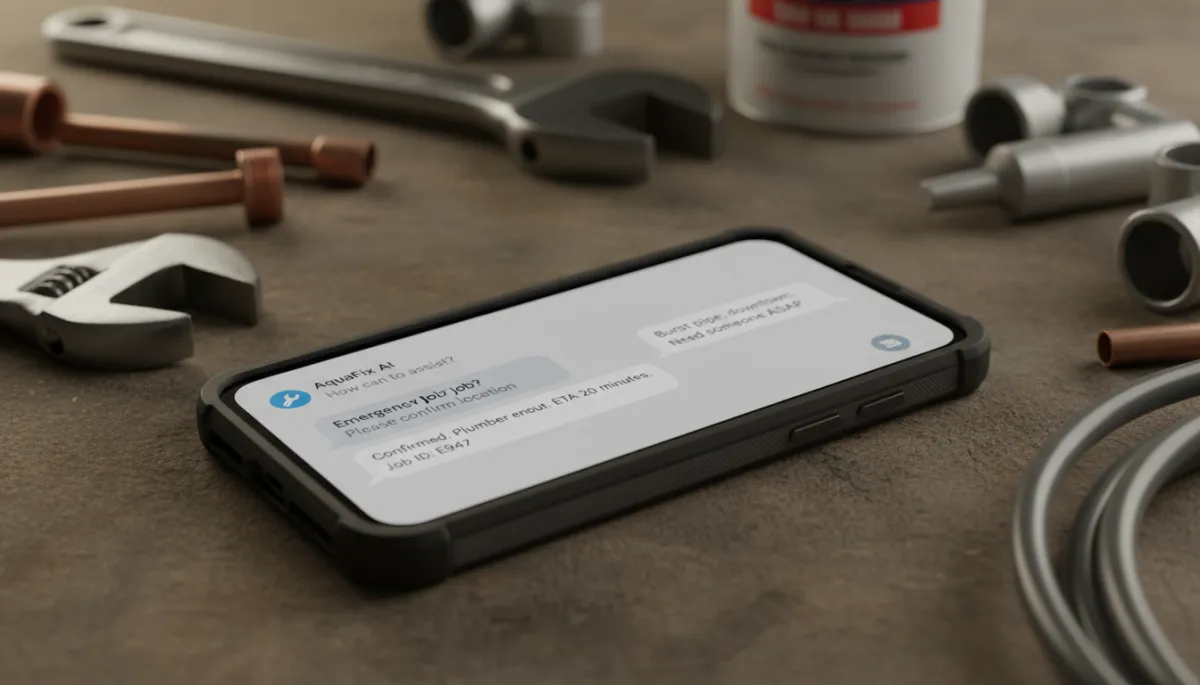
AI reception quietly books profitable emergency jobs while your team is in the field.
How does AI triage burst pipes, no hot water, and sewer backups in real time?
Not every call at night is a true emergency. The power of an AI receptionist is that it can intelligently separate urgent from non-urgent, using structured questions and decision logic tailored for plumbing. For example, the IBP AI Receptionist (Virtual Office tier) can be configured with rules like:
If the customer reports active water leaking that they cannot shut off → classify as “high priority emergency” and alert on-call immediately.
If they have no hot water but water is still running and no leaks are present → offer first-morning appointment and explain expectations clearly.
If there is a sewer backup into fixtures → classify as “immediate health risk” and trigger emergency protocol.
The AI can also provide basic safety instructions while a tech is en route — for example, advising the customer how to shut off the main water valve or avoid using fixtures connected to a blocked line. This level of guidance builds trust and positions your company as the calm, professional expert in a stressful moment.
What does this look like in a Colorado winter plumbing emergency?
Imagine a typical January night in Colorado. Temperatures have been below freezing for days. At 1:47 a.m., a homeowner in Fort Collins wakes up to the sound of water spraying in the basement — a supply line has frozen and burst. They grab their phone, search “emergency plumber near me,” and start dialing the top results on Google’s Performance Max Pay-Per-Lead (PMax PPL) campaigns and map pack. Note: As of August 2026, Google has migrated Local Service Ads into Google Ads as Performance Max Pay-Per-Lead (PMax PPL) campaigns — the pay-per-lead model contractors rely on still exists, it now just lives inside Google Ads.
Company A uses voicemail and a generic answering service. The call rings, then goes to a recorded message: “Our office is currently closed. Please leave a message and we will return your call during normal business hours.” The homeowner hangs up before the beep and dials the next listing.
Company B has implemented Instant Business Pro’s missed call text-back and the IBP AI Receptionist (Virtual Office tier). The office line rings three times without an answer because the dispatcher is off duty — but within seconds, the homeowner receives a text:
“Hi, this is Rocky Mountain Plumbing. We just missed your call. Are you dealing with a plumbing emergency like a burst pipe or no heat? Reply YES and tell us what’s happening so we can help right away.”
The homeowner replies: “YES. Pipe burst in basement, water everywhere, can’t find shutoff.” The IBP AI Receptionist immediately:
Asks for the address and confirms service area.
Sends simple instructions to locate and shut off the main valve, with photos or diagrams if configured.
Collects photos of the damage to help the tech prepare parts and equipment.
Flags this as a “high priority emergency” and immediately alerts the on-call technician by SMS with all details.
Within minutes, the tech confirms availability, and the AI receptionist books the job, shares an estimated arrival window, and sends a confirmation text to the homeowner. By the time Company A’s voicemail picks up its next message in the morning, Company B has already completed the repair, earned a five-star review, and likely gained a long-term maintenance-plan customer.
How does AI-powered after-hours response integrate with your existing marketing?
Most plumbing companies already invest in Google Performance Max Pay-Per-Lead (PMax PPL), PPC, and SEO to generate emergency calls. Those channels work — but they only pay off if someone responds in seconds. In fact, Google increasingly rewards businesses that respond quickly to PMax PPL leads with better visibility and lower cost per lead. Adding after-hours plumbing AI on top of your existing marketing stack multiplies the return on every dollar you spend.
PMax PPL and call-only ads: AI ensures that every call triggered by your ads gets an instant response, even if it comes in at 11:30 p.m. on a Saturday.
Google Business Profile and organic search: When map-pack calls spike during storms or freezes, AI helps you capture the surge instead of overwhelming your front desk.
Website forms and chat: AI reception can handle web inquiries in real time, turning late-night form fills into scheduled jobs, not Monday-morning callbacks.
💡 Pro tip: Treat AI response as part of your core plumbing after-hours emergency marketing strategy — not a back-office tool. It is the bridge between expensive lead generation and actual booked revenue.
What is the ROI of AI missed call text-back and a 24/7 AI receptionist?
For plumbing contractors, the question is not whether AI is impressive; it is whether it pays for itself. The numbers around emergency plumber lead capture are compelling. Let us model a conservative scenario for a small to mid-sized shop:
You currently generate 40–60 emergency calls per month from ads, SEO, and referrals.
Due to after-hours timing, busy lines, and voicemails, you miss or fail to convert 8–12 of those calls.
Your average emergency job value is $650–$900.
If an AI system like Instant Business Pro’s missed call text-back combined with the IBP AI Receptionist (Virtual Office tier) helps you capture even five additional emergency jobs per month, that is:
5 jobs × $750 average ticket = $3,750 in additional monthly revenue.
Over 12 months, that is $45,000 in incremental revenue — from leads you were already paying to generate but not fully capturing. In busier markets or during harsh Colorado winters, the upside can be much higher, especially when one or two of those saved calls turn into sewer replacements or repipes in the $5,000–$8,000 range.
Importantly, the margins on emergency work are usually stronger than on scheduled maintenance. That means each additional captured job contributes disproportionately to profit, not just top-line revenue. In many cases, contractors see a 4:1 to 8:1 return on automation investments when measured over a full year, especially as they integrate AI into more touchpoints like follow-up, memberships, and review requests.
How does an AI receptionist improve professionalism and customer trust?
Homeowners in crisis judge your company long before the technician arrives. A voicemail greeting or a rushed, half-awake phone answer from an on-call tech does not inspire confidence. By contrast, a polished, consistent AI receptionist can present your brand professionally every single time:
It uses your company name, service area, and brand voice in every interaction.
It clearly explains next steps: “We have you scheduled for a 2–4 a.m. emergency window. Our technician will call when en route.”
It can send confirmation and reminder texts with your logo, links to your reviews, and basic preparation tips.
By the time your tech knocks on the door, the customer already feels taken care of. That trust translates into smoother jobs, less price resistance, and more five-star reviews — all of which feed back into your plumbing after-hours emergency marketing by boosting your reputation in search results and Performance Max Pay-Per-Lead (PMax PPL) campaigns.
How can your plumbing business get started with after-hours AI quickly?
Implementing AI does not have to mean ripping out your existing systems. Most contractors start with a simple, high-ROI rollout:
Turn on missed call text-back using a solution like Instant Business Pro, so every unanswered call instantly triggers a professional, branded text.
Add the IBP AI Receptionist (Virtual Office tier) to handle after-hours and overflow calls, with scripts tailored to your services, service area, and emergency protocols.
Integrate with your calendar and dispatch tools so the AI can book jobs directly and notify on-call techs without manual steps.
Measure results over 60–90 days: track additional jobs booked outside office hours, average ticket size, and closing rates from emergency leads.
From there, you can expand AI’s role into follow-up campaigns, membership renewals, and review requests — but the fastest wins almost always come from capturing after-hours emergencies that used to slip away.
What outcomes can you expect from AI-driven after-hours plumbing response?
When you combine AI missed call text-back with a 24/7 AI receptionist, you are not just adding another tool — you are redesigning how your company shows up in the most important moments for your customers. Contractors who adopt this approach typically see:
More emergency jobs captured — especially at night, on weekends, and during weather events when call volume spikes.
Faster response than competitors still relying on voicemail, basic answering services, or manual callbacks.
Higher close rates from PMax PPL, PPC, and SEO because every lead gets an immediate, professional response.
Improved reputation and reviews thanks to clear communication, expectations, and follow-through at every step.
Most importantly, you build a resilient, scalable emergency response system that does not depend on one overworked dispatcher or an unreliable answering service. Whether you are a solo operator or running a multi-truck operation across Colorado and beyond, AI gives you the ability to “answer first” — consistently — and to own the emergency space in your market.
Next steps: turn after-hours plumbing calls into your most reliable profit center
Plumbing emergencies will always happen at the worst possible times — 2 a.m., holiday weekends, the first hard freeze of the year. The contractors who win in 2026 are those who treat plumbing after-hours emergency marketing as a system, not a gamble. By pairing AI missed call text-back with a 24/7 AI receptionist, you ensure that every urgent inquiry gets an instant, professional response that builds trust and books the job before your competitors even realize the phone rang.
If you are ready to capture more emergency jobs, smooth out your on-call workload, and turn late-night chaos into predictable revenue, explore how Instant Business Pro’s missed call text-back and IBP AI Receptionist (Virtual Office tier) can fit into your business. A short setup today can protect thousands of dollars in revenue the next time the phone rings after hours.
Ready to see what this is costing your business?
IBP builds the complete AI lead response system for Colorado contractors — missed call recovery, automated follow-up, and review requests — in 14–21 days, fully managed. The IBP Revenue Calculator shows your exact opportunity in 60 seconds. Free, no sign-up needed.
