
Surviving 2026 Tariffs: Contractors' Strategies
Tariffs, Contractor Margins, Estimate Follow-Up Automation
How Colorado Contractors Are Surviving 2026 Material Tariffs: 5 Pricing and Lead Gen Strategies That Are Working Now
Tariffs have turned 2026 into a pressure cooker for home service contractors — material costs keep climbing, quotes feel higher than ever, and customers are ghosting after they see the number. This guide breaks down what is really happening to your margins and how leading contractors are using automation to recover estimates, protect profit, and avoid raising prices or cutting quality.
1. The reality contractors are living in 2026
Across the United States — from Colorado to the Carolinas — contractors are dealing with the harshest tariff impact on contractors 2026 has delivered so far. Tariffs have added real, unavoidable costs for 91% of contractors. Material suppliers and manufacturers have pushed through another 2–10% price increase for 2026, on top of years of steady hikes and supply chain volatility.
HVAC is the clearest example. Typical system installs that used to land in the $6K–$8K range in 2019 are now routinely $12K–$15K+. That is not padding — it is the combined effect of tariffs, higher equipment costs, new refrigerant requirements, and labor inflation. For many home service contractors, contractor material costs 2026 are the highest they have ever seen, and there is no easy way to trim them without sacrificing quality or safety.
At the same time, 84% of contractors say aggressive competitive pricing is one of their top challenges. The market is crowded, and some competitors are underbidding just to keep their crews busy — even if that means working for thin or negative margins. Customers, already dealing with inflation in every part of life, are more price‑sensitive and more cautious than they were even a few years ago.
2. Definition: What tariff-driven cost pressure really means in 2026
Tariff-driven cost pressure is the compounding squeeze contractors feel when government tariffs drive up the price of imported materials and equipment, and those increases flow straight into bids, change orders, and cash flow. In 2026, this pressure shows up as:
Higher base prices from manufacturers — including another 2–10% bump this year alone.
Post-bid material price increases that hit 80% of firms, blowing up carefully estimated jobs after the quote is already in the customer’s hands.
Thinner margins on every project, even when you sell the job, because costs move faster than most contractors can update pricing or contracts.
In short, how to survive tariffs as a contractor in 2026 is less about finding cheaper materials and more about tightening your sales process, protecting every estimate, and making sure more of your existing leads convert into booked work at the right price.
3. The real math: why losing one estimate hurts more now than in 2022
In 2022, many residential contractors were closing around 80% of estimates. Today, as customers experience sticker shock, closing rates of 50% are becoming the norm. The work has not changed — the tariff impact on contractors 2026 has just made every quote feel heavier to the homeowner’s wallet, so more of them go quiet after seeing the number.
Consider a typical HVAC or major home service job that now prices at $12K–$15K+. A lost estimate in 2022 might have been half that size. Losing one job then hurt, but losing one today means losing double the revenue and double the contribution to overhead and profit. When post-bid material price increases and manufacturer hikes eat into the margin you do have, every missed estimate becomes even more expensive in real terms.
That is why contractor margin protection in 2026 is not just about sharper estimating. It is about recovering estimates that would otherwise die in the inbox — and doing it consistently, without adding another full‑time office role to chase every lead by hand. This is where estimate follow-up automation is changing the game for contractors who want to hold pricing and still win work.
4. Old close rate vs. new close rate vs. automated follow-up recovery
The table below shows how close rates have shifted — and what contractors are seeing when they plug in AI‑driven estimate follow-up automation to re‑engage quiet leads and recover stalled estimates.
Scenario | Typical Close Rate | Impact on 10 Estimates / Month |
|---|---|---|
Pre‑tariff environment (around 2022) | ~80% | 8 booked jobs |
2026 tariff crunch, no automation | ~50% | 5 booked jobs — 3 lost to silence or slow follow-up |
2026 with automated estimate recovery | Near 100% on engaged estimates | Up to 10 booked or re‑set appointments — AI follow-up recovers quiet leads |
In real AI‑automated follow-up case studies, contractors have seen estimate conversions jump from 5–10% to near 100% on the leads the system works — adding 13+ extra appointments in the first 30 days. That is a direct answer to how to survive tariffs as a contractor without slashing prices: protect and convert the leads you already paid to generate.
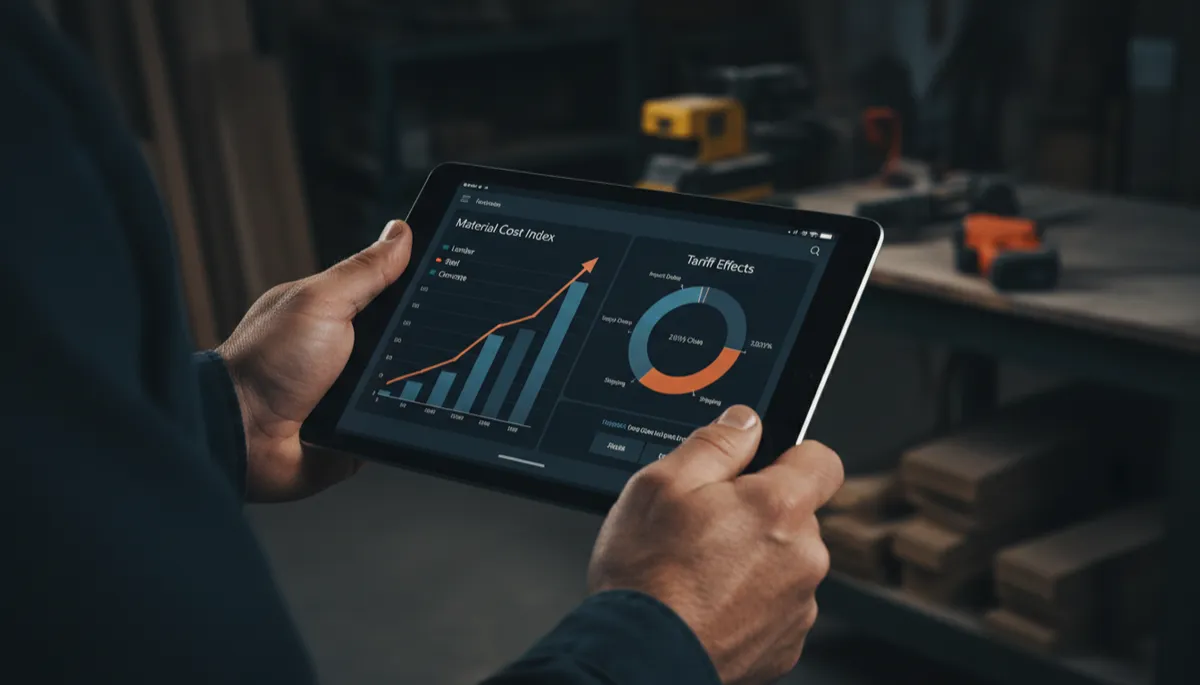
Visualizing tariff-driven cost pressure helps contractors price accurately and defend margins.
5. Why spending more on ads makes the problem worse
When close rates fall from 80% to 50%, most contractors think, “We just need more leads.” The instinct is to spend more on Google Ads, local service ads, or lead marketplaces. In a high-tariff, high-cost environment, that move often backfires.
You pay more per lead — ad platforms are more competitive, and aggressive discounters are bidding on the same clicks.
Your tariff impact on contractors 2026 means your quotes are higher, so more of those expensive leads go quiet after seeing the estimate.
Your office team gets stretched thin chasing more leads with the same manual follow-up process — and response times slip, which hurts close rates even more.
The fix is not more ad spend — it is converting more of the leads already in your pipeline. That is why many contractors are first tightening their lead management and automation systems before they increase their marketing budget. Otherwise, they are just pouring more water into a leaky bucket.
6. Steps contractors are taking now to protect margins without raising prices
Locking in a clear estimate follow-up process. Top contractors do not rely on “we’ll call them back.” They set a standard cadence of calls, texts, and emails — then automate it. Estimate follow-up automation makes sure every quote gets multiple professional touches without adding office staff.
Explaining tariff-driven price changes up front. Instead of hiding from the conversation, they briefly explain contractor material costs 2026, tariffs, and manufacturer increases. This helps customers understand why the quote looks different from what they paid in 2019 and reduces sticker shock.
Shortening the quote-to-schedule window. With trade-specific workflows, they move customers from estimate to scheduled job quickly — before another price increase or supplier change eats into margin. Faster decisions mean less exposure to post-bid cost spikes that hit 80% of firms.
Using AI to prioritize hot leads. AI tools score and segment leads so sales teams call the right people first — homeowners who opened the quote, clicked financing, or replied to a text. This is a core part of contractor margin protection in a year when every crew hour matters.
Standardizing profitable packages. Instead of custom‑building every proposal, they create standard, profitable options — good, better, best — and plug them into automated proposals. This limits discounting under pressure and keeps margins consistent even when tariffs move again.
Leveraging free tools before adding overhead. Many are using free calculators and workflow tools to benchmark close rates, response times, and campaign performance before hiring more staff or agencies.
Studying what is working in similar markets. Contractors are looking at case studies from other trades and regions — including high-cost markets like Colorado — to model pricing, follow-up, and automation strategies that already work under tariff pressure.

Automated estimate follow-up keeps your pipeline moving even when customers go quiet.
7. How IBP’s automated estimate recovery and Growth Engine plan fix the problem
Instant Business Pro (IBP) was built around one core reality of tariff impact on contractors 2026: you cannot control global trade policy, but you can control how efficiently you turn leads into booked jobs. IBP’s automated estimate recovery and follow-up services do exactly that, with the Growth Engine plan designed specifically for contractors who want to protect margins without raising prices or cutting corners.
AI-automated follow-up on every estimate. Once a quote goes out, IBP’s system sends timely, professional follow-ups by text, email, and voice — tuned for home service customers. This is the same approach behind case studies where estimate conversions jumped from 5–10% to near 100%, adding 13+ extra appointments in the first 30 days.
Recovery of quiet and “lost” estimates. If a customer goes silent after seeing the price, the system does not stop. It re‑engages them with clear, respectful messages, answers common objections, and offers to reschedule calls — turning “no response” into real conversations again.
Trade-specific workflows. IBP supports multiple trades — HVAC, plumbing, electrical, roofing, and more — with prebuilt workflows for each trade. That means homeowners get messages that sound like your business, not generic marketing copy.
For contractors who want a full stack of tools, IBP also offers the Digital Foundation plan for core systems, the Virtual Office plan for front‑desk and scheduling support, and the Growth Partner plan for deeper, ongoing optimization. You can review the differences on the pricing and plan tiers page, then match them to your current stage and growth goals.
To see how these pieces fit together — from lead capture to estimate follow-up to booked jobs — explore the full overview of IBP’s services for contractors. You will see how automation turns tariff pressure into an opportunity to run a tighter, more resilient business.
8. FAQ: Surviving the 2026 tariff crunch as a contractor
Below are voice-search-friendly answers to the questions contractors are asking most about tariffs, margins, and automation in 2026.
How are tariffs impacting contractors in 2026?
Tariffs have raised costs for 91% of contractors, especially on imported HVAC equipment, metals, and building products. Manufacturers responded with another 2–10% price increase for 2026, and 80% of firms are seeing material prices jump even after bids go out. The result — higher quotes, more customer sticker shock, and squeezed margins on every job you win.
Why are my HVAC quotes so much higher than a few years ago?
Since 2019, HVAC system prices have nearly doubled. Jobs that were $6K–$8K are now commonly $12K–$15K+. Tariffs, new refrigerant rules, higher labor costs, and manufacturer increases are all part of the contractor material costs 2026 story. You are not overcharging — the cost structure of the industry has changed.
How can I protect margins without raising prices?
Focus on contractor margin protection by improving your close rate rather than your price. That means faster follow-up, clearer communication about tariffs, and structured offers. Tools like IBP’s Growth Engine plan use estimate follow-up automation to recover quiet leads, so you book more of the work you already quoted — without discounting or cutting corners.
Is spending more on ads a good idea during the tariff crunch?
Not until your follow-up system is tight. With close rates dropping from 80% to 50%, paying for more leads just sends more people into a leaky sales process. In most cases, the smarter move is to fix follow-up first — then scale ads once you know you are converting as many leads as possible. IBP’s case studies show how this approach works in real contracting businesses.
What does AI-automated follow-up actually do for my business?
AI-automated follow-up sends timely, personalized messages to every lead and estimate — even when your team is on job sites. It answers basic questions, nudges customers to review quotes, and prompts them to schedule or reschedule appointments. In practice, contractors see estimate conversions jump from 5–10% to near 100% on worked leads, often with 13+ additional appointments in the first month.
How fast can IBP’s system be set up for my contracting business?
Typical setup for IBP’s automation — including the Growth Engine plan — runs about 14–21 days. That window covers intake, configuration for your trade, and testing. Once live, the system starts working your existing pipeline immediately, which is critical when tariffs and manufacturer increases are already compressing your margins.
Which trades can use IBP’s estimate recovery and follow-up?
IBP supports a wide range of home services — HVAC, plumbing, electrical, roofing, remodeling, and more. The platform includes trade-specific setups so your follow-up messages, pipelines, and automation rules match how your business actually runs.
9. Next steps: Turn tariff pressure into a stronger sales engine
Tariffs are not going away, and contractor material costs 2026 will not suddenly roll back to 2019 levels. What you can control is how efficiently you convert leads, how consistently you follow up on estimates, and how well you protect margins on every job you win. That is where automation, not more ad spend, becomes your competitive advantage.
If you want a deeper look at how automation fits into your current tech stack, you can review IBP’s services and study real contractor case studies. To compare options, you can also explore the Growth Engine plan alongside the Digital Foundation, Virtual Office, and Growth Partner plans and decide which level of support fits your team.
When you are ready to tighten your pipeline and protect your margins against the tariff impact on contractors 2026, you can talk to the IBP team. Implementation typically takes 14–21 days, after which your estimates, follow-up, and appointment setting run on a system built to handle the realities of this year’s tariff crunch — without raising prices or cutting corners.
