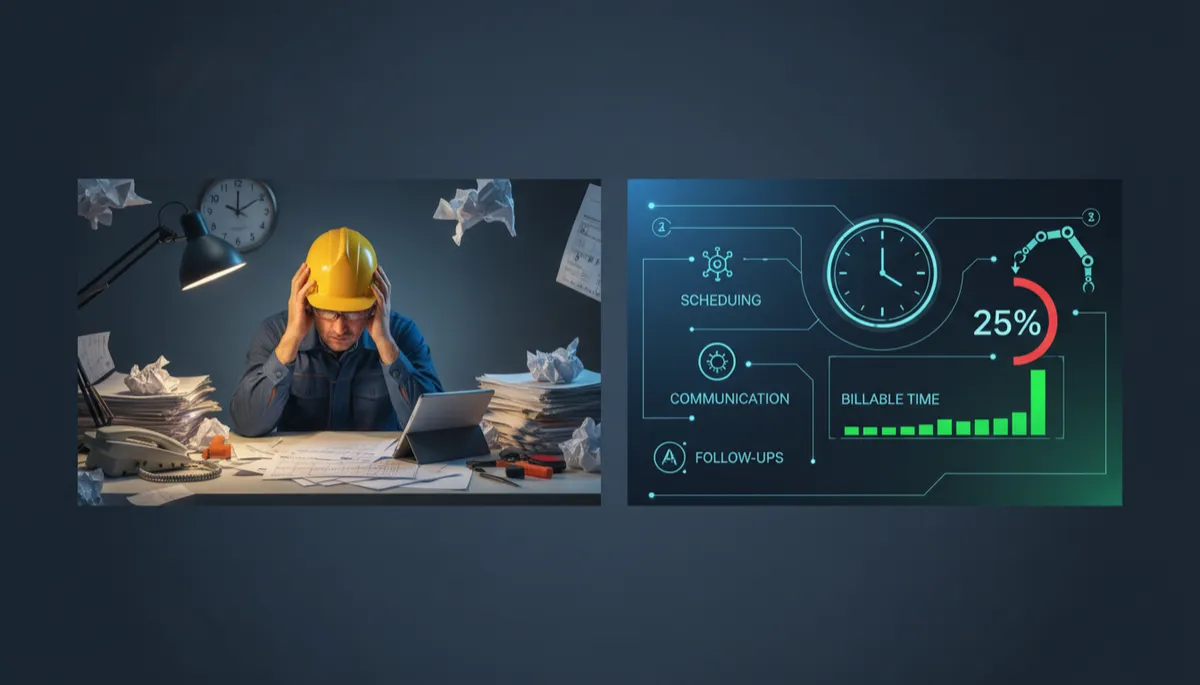
Win Back Billable Hours with AI Automation
HVAC, AI automation, Non-billable time contractors
How Colorado HVAC Contractors Win Back 8–12 Hours/Week of Billable Time by Automating Dispatch, Follow-Up, and Scheduling
HVAC technicians and other trade contractors are losing up to a quarter of every workday to non-billable tasks. This post breaks down where that time really goes, what it costs your business, and how AI automation helps you win those hours back without adding headcount.
1. The hidden reality: your tech is on the job site, but a quarter of his day is not
Picture your best HVAC tech on a full schedule. The truck is rolling. The board is packed. On paper, it looks like a solid eight-hour, fully billable day. In reality, up to 25% of that day is getting taxed by work you can’t invoice—scheduling conflicts, paperwork, parts chasing, missed follow-ups, and constant back-and-forth communication. Industry studies show many HVAC techs only bill about 5.5 to 6 hours in a long workday. The rest is contractor admin time that quietly erodes margin on every job.
For a typical eight-hour day, that 25% tax is two full hours. Multiply that across a three-person crew, five days a week, fifty weeks a year, and you are staring at a serious leak in revenue and capacity—even before you talk about callbacks or overtime. This is the core problem for non-billable time contractors need to solve in 2026 if they want to grow without burning out their teams.
2. What non-billable time actually is (and why it matters in 2026)
Non-billable time is any part of your crew’s workday you pay for but cannot invoice a customer for—time spent on admin, coordination, or waiting instead of turning wrenches or solving problems on site. For contractors, non-billable time includes scheduling, dispatch, paperwork, tracking parts, chasing approvals, and handling follow-ups. It also covers time lost to communication gaps, job information that is missing, or customers who never got the reminder call and are not home when your tech arrives.
In 2026, when HVAC tech productivity 2026 is under a microscope and labor is tight nationwide, non-billable time is no longer just “the cost of doing business.” It is a controllable line item. The contractors who win are the ones who treat non-billable time like a tax they can reduce—with better systems, automation, and clear processes instead of more heroics from the office manager or lead tech.
3. The 5 biggest non-billable time drains for trade contractors
For most HVAC, plumbing, and electrical shops, non-billable time clusters around the same five friction points. These are the areas where AI automation for contractors can have the fastest impact.
Time Drain | What It Looks Like Day-to-Day | Impact on Billable Hours |
|---|---|---|
Scheduling conflicts | Double-booked techs, long drive times, last-minute reshuffles when a job runs long. | Idle gaps between jobs, wasted windshield time, fewer completed calls per day. |
Paperwork and admin | Writing up invoices at night, retyping job notes, hunting for photos and signatures. | Techs working off the clock, office staff buried in manual entry instead of dispatching. |
Parts delays | Jobs paused mid-stream while techs call the office or supply house, extra trips for missing parts. | Fewer completed jobs per tech per day, more callbacks and rescheduled visits. |
Missed follow-ups | Estimates that never get a call, maintenance reminders that never go out, no system for check-ins. | Lost repeat work, lower close rates, more time chasing cold leads later. |
Communication gaps | Customers unsure when you will arrive, techs missing key job notes, office relaying the same info repeatedly. | No-shows, cancellations, rework, and more time spent “just checking in.” |
4. The real dollar math: what 25% lost time costs a 3-person crew annually
Let’s run conservative math. Assume each tech on your crew could reasonably bill eight hours a day if all the friction disappeared. With a 25% non-billable tax, they are only billing six. That is a loss of two billable hours per tech per day. For a three-person crew, that is six billable hours gone every day—time you are paying for but not invoicing.
Over a standard five-day week, that is 30 hours. Over fifty working weeks, you are looking at roughly 1,500 billable hours per year that disappear into non-billable work. Even without putting a specific rate on those hours, you know that 1,500 hours is the equivalent of another full technician’s annual output—sitting inside your existing payroll, trapped in admin and coordination. For non-billable time contractors, this is the clearest argument for getting serious about automation and better workflow design. You can see how similar companies have closed this gap in IBP’s contractor case studies.
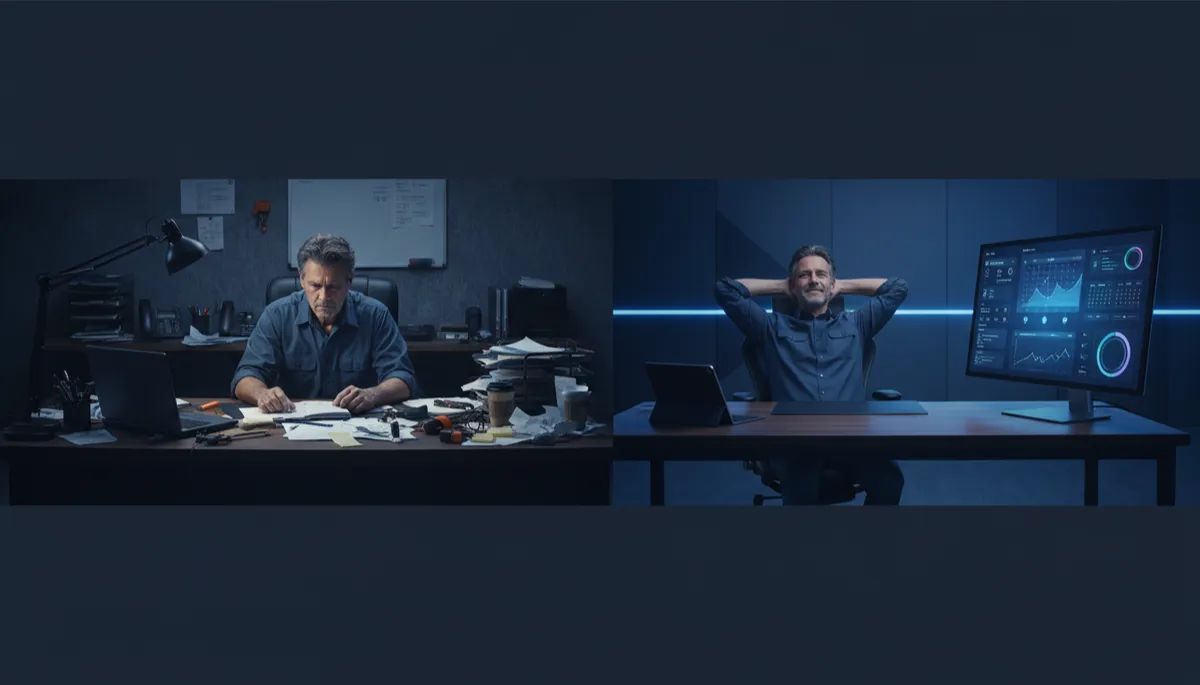
Turning 25% lost time into billable hours often equals a full extra tech.
5. Why hiring more staff is not the answer in 2026
In past years, the default answer to lost time was “hire another tech” or “add another coordinator in the office.” In 2026, that is not realistic for most contractors. Industry data shows 88% of construction and trade firms say craft labor positions are as hard or harder to fill than a year ago. That lines up with what HVAC and plumbing owners are seeing from Colorado to the Southeast—job postings stay open for months, and experienced techs can choose from multiple offers.
The labor shortage means every billable hour from your existing staff is more valuable than ever. You cannot count on hiring your way out of inefficiency. Instead, how to do more with fewer employees has become the competitive question. Lean teams that run like larger organizations—because their workflows are tight and much of the admin is automated—are the ones gaining market share in 2026, even while others are stuck turning down work or burning out their limited crews.
That is why more contractors are looking at the trades IBP serves and asking how AI can handle the routine work so their people can stay focused on revenue-producing tasks.
6. Six ways AI automation wins back billable hours for your crew
Smart scheduling that reduces windshield time. AI looks at job type, location, traffic patterns, and technician skill sets to build efficient routes. That means fewer long gaps and less time burning fuel between calls—directly improving HVAC tech productivity 2026.
Automatic confirmations and reminders. Instead of your office manually calling or texting, AI sends confirmations, reminders, and “on the way” messages. Fewer no-shows and cancellations mean more completed jobs per day with the same crew size.
Instant job information for every visit. AI systems can assemble job history, equipment data, and notes before the tech arrives. Less time calling the office, more time solving the problem on site. That is a direct reduction in contractor admin time.
Automated follow-ups on estimates and maintenance. After a visit, AI can send quote follow-ups, membership offers, and maintenance reminders on a schedule—without anyone in the office building manual lists. You capture more of the work you already earned, without extra labor.
Structured communication channels. AI-powered inboxes and messaging keep conversations organized by job and customer. No more digging through text threads or sticky notes. The right information reaches the right person at the right time, cutting down on rework and confusion.
Real-time visibility into utilization and bottlenecks. AI dashboards show where non-billable time is spiking—by tech, job type, or day of the week. That lets you adjust staffing, pricing, and process based on data, not guesswork. It is the practical side of AI automation for contractors, not just theory.
Together, these six capabilities are how top-performing small shops are running like larger operations in 2026—without adding headcount. They are using AI to free up their people, not replace them.
7. How IBP’s Virtual Office plan gives you those hours back
IBP’s Virtual Office plan is built specifically to attack the 25% non-billable tax for contractors. It acts like a digital coordinator that never sleeps—handling scheduling, communication, and follow-up in the background so your crew can stay on the tools. The system plugs into your existing workflows and tools, then layers AI on top to streamline the work you already do.
Virtual Office can automatically schedule and reshuffle jobs, send customer updates, organize inbound calls and messages, and trigger follow-up campaigns after every visit. It is part of a full stack of services that includes the Digital Foundation plan and Growth Engine plan, with the Growth Partner plan available when you are ready to scale further. Many HVAC and home service shops first discover IBP through case studies from contractors like them, then choose Virtual Office as the direct fix for their non-billable time problem.
8. Manual admin vs. AI-automated workflow: side-by-side comparison
Workflow Type | Time Spent Per Tech Per Day | Cost Impact | Error and Missed Opportunity Rate |
|---|---|---|---|
Manual admin and scheduling | 2+ hours in calls, paperwork, and chasing information. | 25% or more of paid time is non-billable, raising true labor cost. | High—frequent no-shows, missed follow-ups, and data entry mistakes. |
AI-automated workflow with Virtual Office | Minutes instead of hours—AI handles scheduling, messaging, and follow-ups. | More hours converted to billable work, better margin per job, stronger cash flow. | Low—standardized processes, consistent reminders, and centralized job information. |
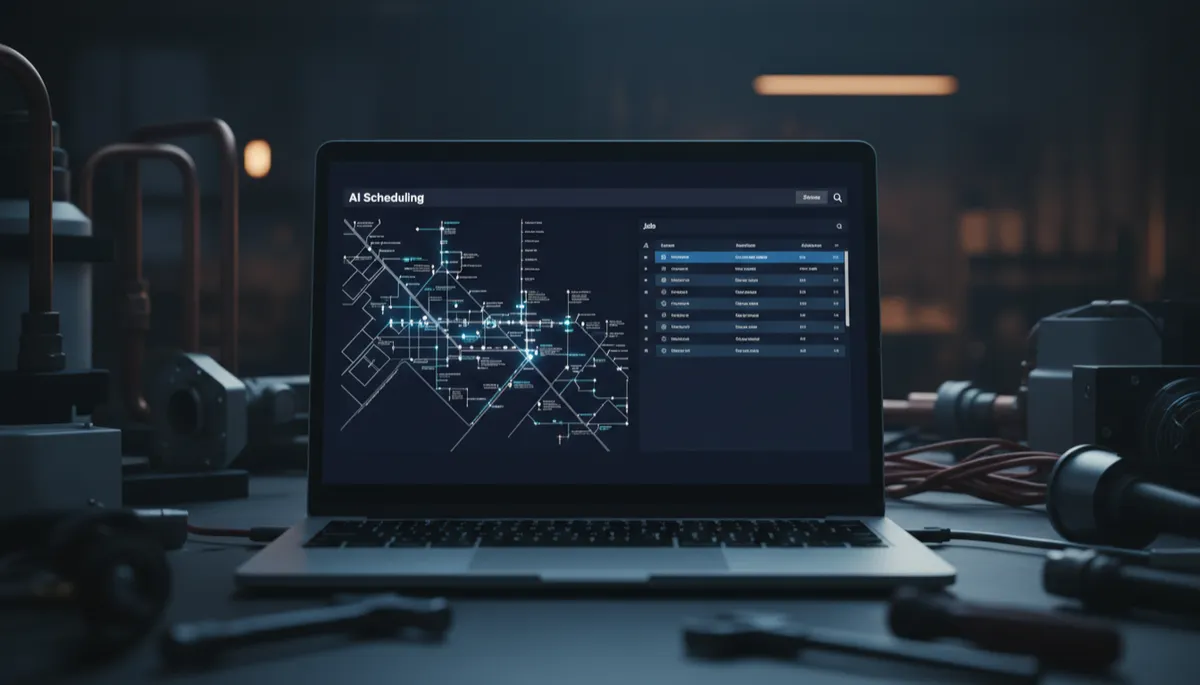
AI scheduling and messaging quietly turn admin drag into consistent billable work.
9. FAQ: winning back billable hours with AI automation
These short, direct answers are written in the same language your team and customers use—optimized for voice search and quick decision-making.
What is non-billable time for contractors?
Non-billable time for contractors is any part of the workday you pay for but cannot invoice—scheduling, paperwork, parts runs, callbacks, and communication gaps. For many non-billable time contractors, this can reach 20–25% of total hours or more if left unmanaged.
How can AI help HVAC techs be more productive in 2026?
AI improves HVAC tech productivity 2026 by automating dispatch, reminders, job prep, and follow-ups. Techs spend less time on the phone or filling out forms and more time completing profitable work on site. It is one of the most practical answers to how to do more with fewer employees.
Do I need to change my whole tech stack to use Virtual Office?
No. IBP’s Virtual Office plan is designed to layer on top of what you already use. During setup, the IBP team maps your existing tools and workflows, then configures AI automation to handle the repetitive scheduling, communication, and follow-up tasks without forcing a complete software overhaul.
How fast can I see results from AI automation for contractors?
Most contractors start seeing measurable gains in billable hours within the first few weeks. Because IBP handles implementation, you are not adding more work to your plate. Typical setup for Virtual Office runs about 14–21 days, after which the system begins reducing manual admin and smoothing out your schedule automatically.
Will AI replace my office staff or just support them?
AI in this context is designed to support your office staff, not replace them. It takes the repetitive tasks—reminders, confirmations, basic follow-ups—off their plate so they can focus on higher-value work like customer experience, dispatch decisions, and managing exceptions. That is how lean teams become a real competitive advantage in 2026.
What if my shop is small—does AI still make sense?
Yes. In fact, small shops often feel the benefit the fastest. When you only have a few techs, every lost hour hits harder. AI automation lets a two- or three-person office run like a much larger back office. You can see how similar companies are using IBP by reviewing contractor case studies across HVAC, plumbing, and other trades.
10. Next steps: stop paying the 25% tax on your crew’s day
The 25% non-billable tax is real, but it is not fixed. In a tight labor market—where 88% of firms say craft labor is as hard or harder to find than last year—the contractors who win are the ones who protect every billable hour and let technology carry more of the admin load. AI-powered scheduling, communication, and follow-up are no longer “nice to have.” They are how lean teams stay profitable and keep growing in 2026.
If you are ready to see how IBP can plug into your shop, you can explore the Virtual Office plan alongside the Digital Foundation, Growth Engine, and Growth Partner tiers. You can also experiment with no-pressure resources like IBP’s free tools for contractors to start understanding your own non-billable time profile.
When you are ready to take the next step, you can get started with IBP. Implementation for Virtual Office typically runs 14–21 days from kickoff to a live, working system. After that, every day you operate without AI automation is another day you are paying the 25% tax unnecessarily.
