AI Dispatching for Multi-Crew Home Services
Home Services, AI Dispatching, Field Operations
AI Dispatching for Multi-Crew Home Service Businesses: How to Add Jobs Without Adding Trucks
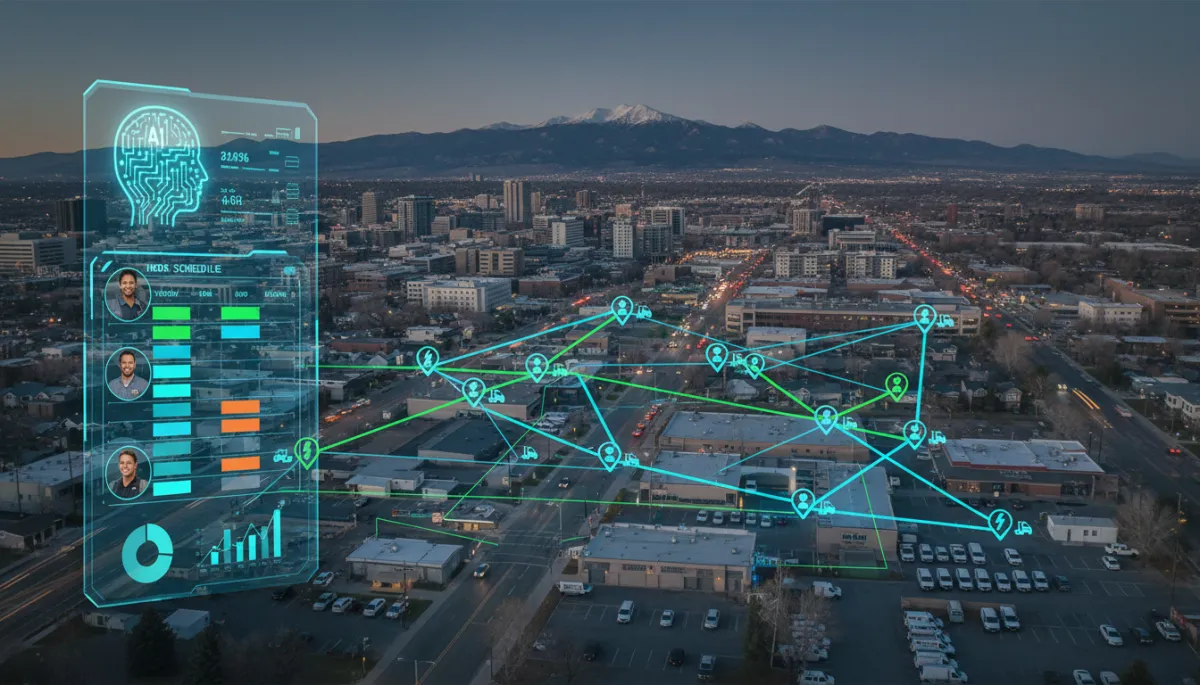
Running three or more HVAC, plumbing, electrical, or landscaping crews turns dispatching into a daily firefight. AI dispatching for contractors changes that—automating scheduling, routing, and technician assignment so you complete more jobs per day with less chaos, fewer missed calls, and a better customer experience.
Why is manual dispatching a hidden full-time job for multi-crew contractors?
Once you grow past one or two trucks, the whiteboard and group text messages stop working. Every day becomes a juggling act—matching jobs to crews, dealing with traffic, handling missed calls, and trying to keep customers updated. For a three-crew operation, that often means the owner or office manager spends several hours a day just reshuffling the schedule and answering, “Where’s my tech?” calls.
Even with the best intentions, manual dispatching leads to predictable problems:
Scheduling conflicts — double-booked technicians, overlapping time windows, or jobs that run long with no backup plan.
Wasted drive time — trucks zig-zagging across town because the schedule was built around when calls came in, not where jobs are located.
Wrong tech on the wrong job — junior techs sent to complex system installs while senior techs burn time on simple maintenance calls.
Unhappy customers — late arrivals, last-minute reschedules, and missed communication when calls go unanswered during busy periods.
Industry data shows AI dispatch agents already outperform manual scheduling boards in complex environments—rebuilding optimized schedules in seconds when disruptions occur. That same approach now fits the realities of home service businesses running three to twenty crews, where every extra job per day directly increases revenue and capacity.
How much is inefficient multi-crew dispatching really costing your business each month?
For most three-crew operations, dispatching is not just an annoyance—it is a major cost center hiding in plain sight. Let us break it down using realistic numbers for HVAC, plumbing, electrical, and landscaping contractors.
Owner time: 5–10 hours per week lost to the board
With three or more crews, it is common for the owner to spend 1–2 hours a day on scheduling, rescheduling, and chasing down crews. Over a five-day week, that is 5–10 hours of high-value time that could be spent on sales, recruiting, or building partnerships instead of moving magnets on a board.
Missed and delayed jobs: 1–3 opportunities lost per day
When the schedule is built by hand, it is easy for one late job or traffic jam to cascade into a half-day of delays. The result—1–3 jobs per day that are pushed, rescheduled, or never booked in the first place because the team is “full” on paper, even though the routes are inefficient.
Across trades, a typical ticket ranges from $500–$3,000, whether that is a same-day water heater replacement, a panel upgrade, or a multi-zone AC repair. At just two missed jobs per day at an average of $1,000, you are looking at:
2 jobs × $1,000 × 20 working days ≈ $40,000 in monthly capacity that never gets billed.
The true cost: $10,000–$50,000 in lost monthly capacity
Conservative math for a three-crew operation shows inefficient dispatching can easily cost $10,000–$50,000 per month in lost or delayed revenue. That does not include the long-term impact of negative reviews, churned maintenance plan members, or customers who never call back after a missed window.
📌 Key Takeaway: If you are running three or more trucks, dispatch is no longer an administrative task—it is a revenue engine. Optimizing it pays for itself quickly.
What is AI dispatching for contractors, and how does it work in the real world?
AI dispatching for contractors uses algorithms—trained on your jobs, locations, and technician skills—to automatically build and update the schedule. Instead of a dispatcher dragging jobs around, the system continuously looks at location, skill set, job type, duration, and real-time availability to assign the right tech to the right job at the right time.
With a platform like Instant Business Pro (IBP), AI dispatching is not a bolt-on—it is integrated with your CRM, pipeline, and scheduling tools. That means:
Leads flow from your website, ads, and missed call text-back directly into the IBP CRM and pipeline.
Jobs are automatically created with location, job type, and priority tags—ready for AI scheduling.
The AI dispatch engine builds optimized routes for each crew, then adjusts in real time as jobs run long or new opportunities come in.
Modern AI dispatch tools take inspiration from logistics and last‑mile delivery, where companies are already cutting route costs by 15–30% and increasing completed stops by up to 35% using similar optimization logic. Applied to home services, those same principles translate into more completed jobs per day without burning out your team.
How does AI dispatching reduce scheduling conflicts across multiple crews?
Scheduling conflicts usually happen when the schedule lives in someone’s head or on a static board. AI dispatching eliminates that by treating the schedule as a live system instead of a one-time plan. Within IBP’s scheduling tools, every job has clear constraints—time windows, duration estimates, and technician requirements—and every tech has defined availability and skills.
When a job is booked, the AI checks all crews in seconds and only places it where it fits without creating an overlap or unrealistic drive time.
If a job runs long, the system automatically suggests who can pick up the next appointment or which jobs should be shifted, instead of forcing the dispatcher to start from scratch.
If a customer reschedules, the AI instantly finds the best new slot across all crews, not just the one that happened to be assigned originally.
💡 Pro Tip: Pair AI scheduling with automated confirmations and reminders so customers know exactly when to expect your crew—and your team knows when plans change.
How does AI route optimization for contractors cut drive time and fuel costs?
Route optimization for contractors is one of the fastest ways to add capacity without adding trucks. Instead of building the day around when calls came in, AI dispatch looks at the map first. Within IBP, the system groups jobs by geography, then sequences them to minimize backtracking and deadhead miles, while still respecting customer time windows and technician skills.
Crews stay in tighter zones, which reduces fuel usage and windshield time between stops. Want to calculate the ROI impact on your operation? Try the ROI calculator.
The system accounts for real-time traffic and historical patterns, updating ETAs and rerouting when needed.
When a new same-day opportunity appears in the pipeline, AI can see which crew is closest and has the right gap—so you can say “yes” more often without blowing up the schedule.
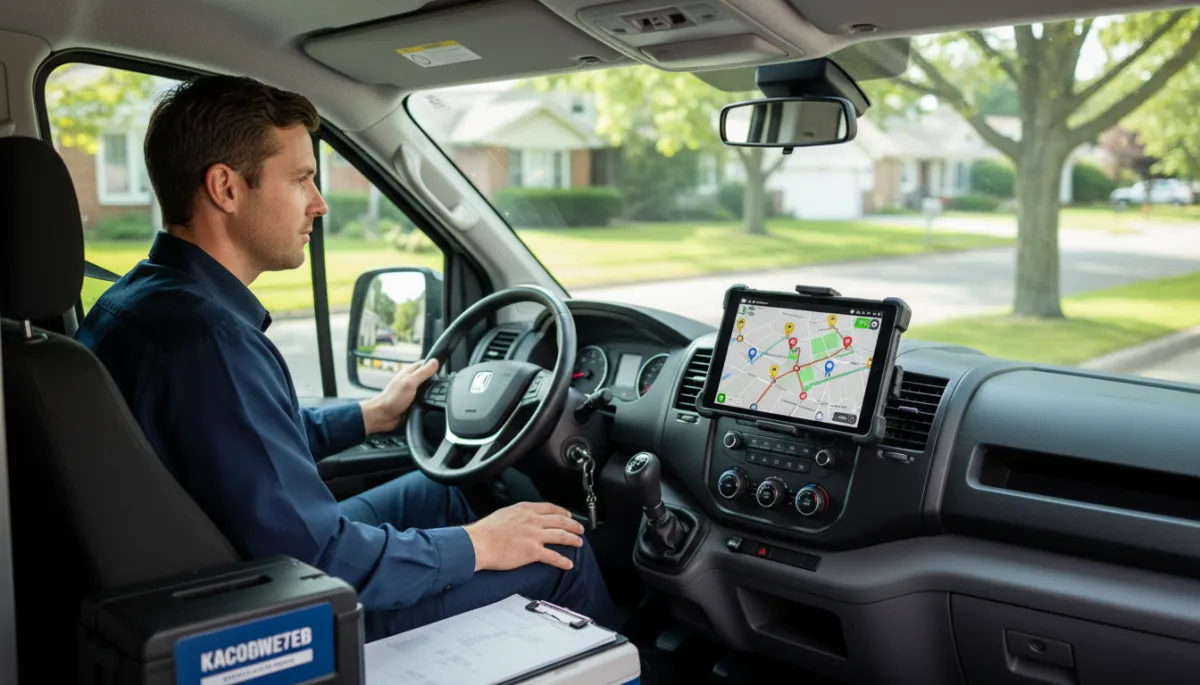
Optimized routing turns wasted windshield time into additional billable jobs each day.
How does AI ensure the right technician is assigned to the right job?
Not every tech should be on every job. Senior installers, apprentices, and licensed electricians all bring different capabilities—and your dispatching should reflect that. Within IBP CRM, each technician can be tagged with certifications, experience levels, and preferred job types. Each job in your pipeline carries its own tags as well, such as “tankless install,” “panel upgrade,” or “seasonal tune-up.”
The AI dispatch engine cross-matches job tags with technician profiles, automatically filtering out techs who are not a good fit for a given task.
For complex or high-ticket jobs, the system can prioritize your most experienced crews to maximize first-visit resolution and upsell potential.
For simple maintenance or recurring services, AI can lean on junior techs, freeing senior staff for higher-value work.
Over time, the system learns from your outcomes—tracking which techs close more jobs, which crews complete certain job types faster, and where callbacks occur. With IBP’s reporting and pipeline views, you can refine your rules and let AI do more of the heavy lifting on assignments, while you focus on coaching and growth.
How many more jobs per day can AI dispatching add for a three-crew operation?
For most multi-crew home service businesses, the first big win from AI dispatching is simply one extra job per crew per day. That might not sound dramatic, but the math adds up quickly when you run the numbers through your CRM and pipeline.
Sample ROI math for a three-crew contractor
Assume you run three crews, each currently completing three jobs per day at an average ticket of $800. That is 9 jobs per day, or 180 jobs per month (20 working days), generating about $144,000 in monthly revenue.
AI dispatching increases efficiency so each crew can handle one more job per day without adding hours—mainly by cutting drive time and eliminating gaps. Now you are at 4 jobs per crew per day, or 12 jobs total per day.
That is 240 jobs per month instead of 180—an extra 60 jobs.
At $800 average ticket, that is $48,000 in additional monthly revenue from the same three trucks and the same team.
Layer in reduced overtime, fewer callbacks from sending the wrong tech, and better review capture from on-time arrivals, and the ROI becomes even stronger. In many cases, AI dispatching and automation more than pays for itself within the first month of implementation, especially when combined with tools like IBP’s missed call text-back to plug revenue leaks at the top of the funnel.
What does AI dispatching look like in a real Colorado multi-crew operation?
Consider a Colorado-based HVAC and plumbing company operating along the Front Range—three mixed-service crews covering Denver, Aurora, and the surrounding suburbs. Before AI, the owner spent 2–3 hours every morning building the day’s schedule and another hour in the afternoon reshuffling jobs when traffic or overruns hit I‑25 or C‑470.
They implemented IBP’s CRM, pipeline, and AI-powered scheduling tools across all three crews:
New leads—phone calls, web forms, and after-hours inquiries—flowed into the IBP pipeline automatically, with missed calls triggering an instant text-back so no opportunity was lost overnight or during peak hours.
Jobs were tagged by service type (repair vs. install), urgency, and location corridor (north, central, south metro).
Technicians were profiled by skill set—tankless, boiler, heat pump, drain cleaning—and by typical job duration.
Within two weeks, the AI dispatch board in IBP was building optimized days automatically. Crews stayed in tighter service zones, and the owner moved from manually planning routes to simply approving AI-suggested schedules and handling exceptions. The results were measurable:
Average jobs per crew per day increased from 3.1 to 3.9—effectively adding almost one full job per truck per day.
Owner time spent on scheduling dropped from ~15 hours per week to under 5, freeing up time for recruiting and commercial bid work.
On-time arrival rates improved, which supported more 5‑star reviews and higher conversion on maintenance plan renewals.
Because IBP ties dispatching directly to CRM and pipeline data, the owner could finally see which marketing channels were producing the most profitable jobs—and which crews were converting the highest-value opportunities. That visibility made it easier to decide where to invest the next truck and hire, instead of guessing from a cluttered whiteboard.
How does IBP support AI dispatching across different growth stages and tiers?
Not every contractor needs an enterprise platform on day one. IBP is structured in tiers designed to match where you are now—and where you are headed—with AI automation woven into each level. While specific pricing is tailored to your operation, the progression typically looks like this:
IBP Starter — ideal for smaller teams moving off spreadsheets. Centralizes contacts in the CRM, tracks basic pipeline stages, and introduces smart scheduling tools so you can move beyond manual boards with a few clicks.
IBP Growth — built for 3–5 crews. Adds deeper automation for AI dispatching, route optimization, and integrated customer communication. This is where most multi-crew contractors see a step-change in jobs per day and owner time saved.
IBP Scale — for larger operations with complex service areas and mixed trades. Delivers advanced reporting, multi-location support, and more sophisticated AI rules for technician-job matching and capacity planning.
Across all tiers, the same core principles apply—capture more opportunities with automation, keep your pipeline organized, and let AI dispatching handle the day-to-day complexity of multi-crew scheduling so you can focus on building the business. You can explore additional workflow automations and communication tools on the main Instant Business Pro site and related resources like the missed call text-back feature page.
What is the outcome of switching to AI dispatching for multi-crew home service businesses?
When you combine AI dispatching with a connected CRM, pipeline, and scheduling system, the outcomes are tangible and compounding:
More jobs completed per day — by tightening routes, filling schedule gaps, and assigning the right tech to each job, you increase revenue without adding trucks immediately.
Less drive time and overtime — crews spend more time on-site and less time in traffic, which improves morale and profitability simultaneously.
Fewer scheduling conflicts — automated checks and real-time adjustments replace guesswork, so double-bookings and missed windows become rare exceptions instead of weekly headaches.
Hours freed up for the owner — instead of spending 5–10 hours a week wrestling with the board, you can focus on hiring, training, partnerships, or simply taking a day off without the schedule falling apart.
In a market where customers expect fast responses, accurate ETAs, and convenient communication, AI dispatching is no longer a nice-to-have. It is how multi-crew home service businesses protect margins, capture more revenue from the same assets, and deliver a consistent experience that keeps customers coming back year after year.
What is the next step if you want to explore AI dispatching for your crews?
If you are running three or more crews today—and you recognize yourself in the daily scheduling scramble—it is worth seeing what AI dispatching could do for your operation. Start by looking at where you are losing time and revenue now: missed calls, rescheduled jobs, or crews driving back and forth across town. Then map those pain points to specific automations inside IBP’s CRM, pipeline, and scheduling tools.
A brief walkthrough of an AI-enabled dispatch board, route optimization, and features like missed call text-back is often enough to quantify the upside for your specific numbers. From there, you can choose the IBP tier that fits your crew count and growth plans, and roll out automation in phases—starting with the highest-impact parts of your day.
Soft CTA: If you are ready to see how AI dispatching could add one more job per crew per day in your business, consider scheduling a short strategy session through the main Instant Business Pro site. A focused conversation and a live demo can help you decide whether now is the right time to modernize your scheduling and dispatch.
