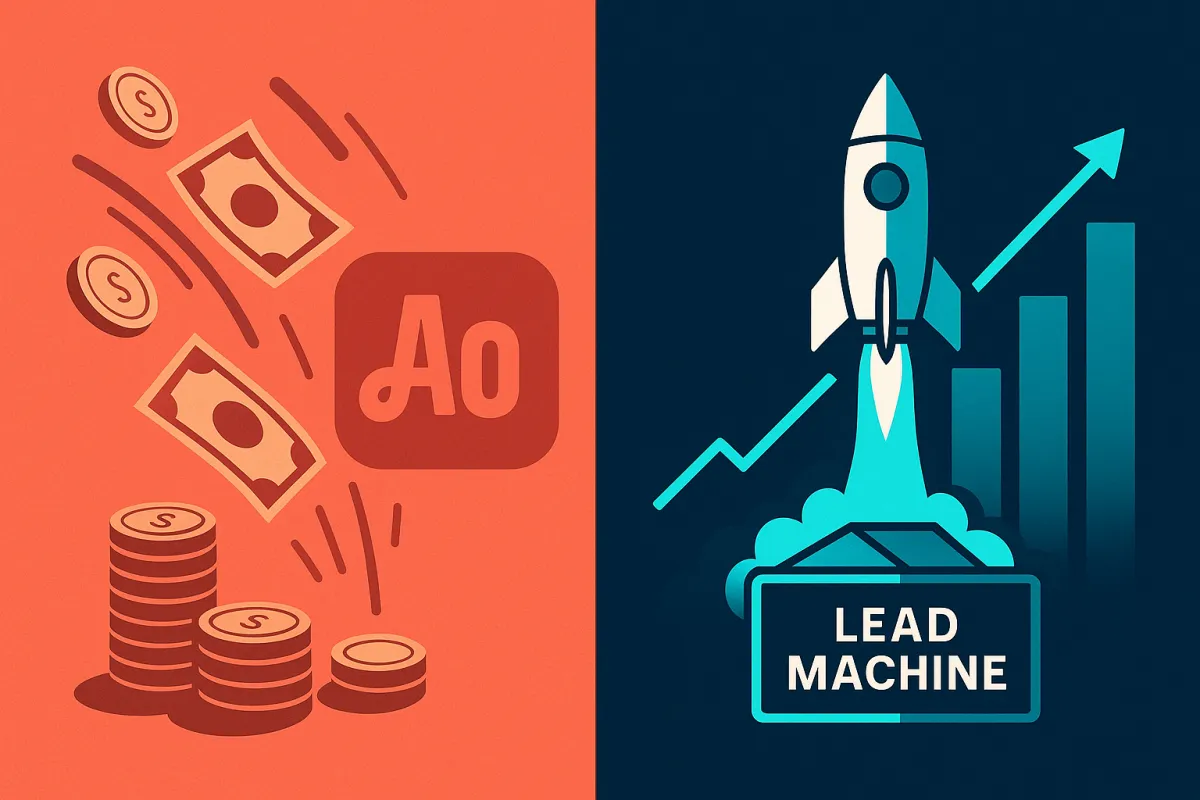
Angi, HomeAdvisor and Thumbtack vs. Building Your Own Lead Machine — Which Actually Wins for Colorado Contractors?
Angi, HomeAdvisor and Thumbtack vs. Building Your Own Lead Machine — Which Actually Wins for Colorado Contractors?
If you have been in the contracting business for more than a few years, you have almost certainly spent money on Angi, HomeAdvisor, Thumbtack, or one of their competitors. And if you are honest, your experience probably looked something like this: a few good leads early on, some frustrating shared leads that went nowhere, rising cost per lead over time, and a nagging feeling that you are building their business more than yours. You are not wrong about that feeling.
This post is not an attack on third-party lead platforms. They serve a real purpose at a specific stage of a contracting business. But for any contractor who is serious about long-term growth, the math on building your own lead machine eventually becomes impossible to ignore. Let us run it together.
What You Are Actually Paying For on Third-Party Platforms
When you buy a lead on Angi or HomeAdvisor, here is what you get: contact information for a homeowner who submitted a project request and who simultaneously had their information sent to two to four other contractors competing for the same job. You are not getting a warm lead. You are getting a starting pistol for a race where everyone runs at once.
The cost structure of this model is significant:
Average cost per shared lead on Angi or HomeAdvisor: $15 to $85 depending on trade and project type
Close rate on shared leads: typically 10 to 20 percent
Effective cost per booked job: $75 to $850 or more depending on your close rate
Annual spend for a busy contractor: $6,000 to $24,000 or more
And that cost is rising every year as more contractors join the platform and bid up the lead price. There is also a more insidious cost that does not show up in your billing statement: time. Chasing shared leads that have already been called by three competitors often before you even saw the notification burns hours of your week on outreach that frequently goes nowhere.
The Own Lead Machine: What It Actually Looks Like
Building your own lead generation system means creating owned channels, assets that generate leads exclusively for you, at declining cost over time, without per-lead fees. The core components are:
Google Business Profile
A fully optimized GBP with consistent review velocity and regular posts puts you in the Google Map Pack for local searches. These are the highest-intent leads in home services. Unlike Angi leads, they called you specifically. There is no race. You can follow a local SEO playbook similar to the one outlined on the main Instant Business Pro site to build this foundation the right way.
Your Website
A website optimized for conversion turns your organic traffic into calls. Once the content and technical foundation is built, it generates leads for years at near-zero marginal cost. Every blog post you publish and every service page you optimize adds to this compound asset. You can model your own checklist after the detailed website and funnel frameworks described in the services overview on the Instant Business Pro services page.
Content Marketing
Consistent, helpful, locally-targeted blog content builds your topical authority, the signal to Google and AI search tools that you are the trusted resource in your niche and market. Over 12 to 18 months, this content becomes one of your highest-performing lead channels and costs you nothing per lead.
Automated Lead Capture and Follow-Up
An own-lead machine that generates calls but misses half of them because you are on a job is not much better than third-party leads. Instant Business Pro’s instant text-back and follow-up automation, detailed alongside pricing and plan options, ensures that every call your owned channels generate is captured, engaged, and held in your pipeline even when you are hands-on with a job.
The 3-Year Math Comparison
Let us compare the economics for a mid-size Colorado contractor over three years:
Third-Party Lead Platform:
Year 1 spend: approximately $12,000
Year 2 spend: approximately $14,400 (costs typically rise)
Year 3 spend: approximately $17,280
Total 3-year spend: approximately $43,680
Lead exclusivity: None
Asset built: None. Stop paying and leads stop immediately.
Own Lead Machine:
Year 1 build investment: $8,000 to $15,000 for website, content, and automation setup
Year 2 maintenance: $3,000 to $6,000
Year 3 maintenance: $3,000 to $6,000
Total 3-year spend: $14,000 to $27,000
Lead exclusivity: 100 percent. Every lead is yours alone.
Asset built: Permanent. A compounding lead engine that grows every year.
By Year 2, the own lead machine is generating exclusive leads at a fraction of the cost per acquisition. By Year 3, most contractors who built the system well are spending less on marketing and booking more jobs than when they were dependent on third-party platforms. When you factor in the real cost of missed calls for contractors, and compare that to the kind of call handling and automation workflows shown on the Instant Business Pro site, you begin to see how much of your marketing budget is actually wasted if you are not ready to capture and convert every lead when it comes in.
When Does It Make Sense to Use Both?
Third-party lead platforms are not always wrong. There are specific situations where they make sense:
New contractor with no established reputation or reviews: third-party leads can fill your schedule while you build organic credibility
Expanding into a new service area: a short-term Angi spend can validate market demand before you invest in location-specific SEO
Filling slow-season gaps: supplemental leads during shoulder seasons can keep revenue stable
The key word in all three scenarios is supplemental, not foundational. Using third-party platforms as a temporary bridge while building your own machine is strategically sound. Using them as your primary growth channel indefinitely means paying a forever tax on every job you book.
How to Start Transitioning Off Third-Party Platforms
Months 1 to 3: Set up and optimize your GBP fully. Get your review velocity system running. Ensure your website has a visible click-to-call number and a simplified contact form.
Months 3 to 6: Start publishing weekly locally-focused blog content. Build out your service area pages. Set up automated lead capture and follow-up.
Months 6 to 12: As your own channels generate consistent leads, begin reducing your third-party ad spend proportionally.
Month 12 and beyond: Evaluate your third-party dependency honestly. If your own machine is generating 60 to 70 percent of your leads, scale back significantly.
Frequently Asked Questions
Is Angi worth it for contractors in 2026?
Angi can generate leads, particularly for new contractors without an established Google presence. However, the shared lead model means you are competing against multiple contractors for every inquiry, and the cost per lead is rising annually. For established contractors, investing that same budget into owned channels typically produces better ROI by Year 2 to 3.
How do contractors stop relying on HomeAdvisor?
The transition happens in parallel: build your Google Business Profile, generate consistent reviews, publish local content, and set up automated lead capture. As your owned channels produce more leads, reduce your HomeAdvisor spend proportionally. Most contractors are able to fully transition within 12 to 18 months with consistent effort.
What is the true cost per lead comparison between Angi and own lead generation?
Third-party leads typically cost $75 to $850 per booked job factoring in close rates on shared leads. Own-lead machine booked jobs, after the initial build investment, typically cost $20 to $80 per booked job by Year 2, and this cost continues declining as your organic assets compound.
How long does it take to build your own contractor lead machine?
Most contractors see meaningful results from their owned channels within 90 to 180 days of consistent effort. Full independence from third-party platforms typically takes 12 to 18 months. The contractors who succeed fastest are those who implement automated lead capture from day one, ensuring every lead their growing organic presence generates is actually captured and converted.
Every Job You Book Through Angi Is Revenue You Could Keep More Of
The math is clear. The path is clear. The only variable is when you start. If you want a concrete example of how to structure your own system, review the contractor trade-specific playbooks on the Instant Business Pro trades page and then explore the full solution overview and pricing at Instant Business Pro and the Instant Business Pro pricing page to see how a done-with-you or done-for-you approach could accelerate your transition from paying per lead to truly owning your lead flow, one step at a time.
Ready to see what this is costing your business?
IBP builds the complete AI lead response system for Colorado contractors — missed call recovery, automated follow-up, and review requests — in 14–21 days, fully managed. The IBP Revenue Calculator shows your exact opportunity in 60 seconds. Free, no sign-up needed.
