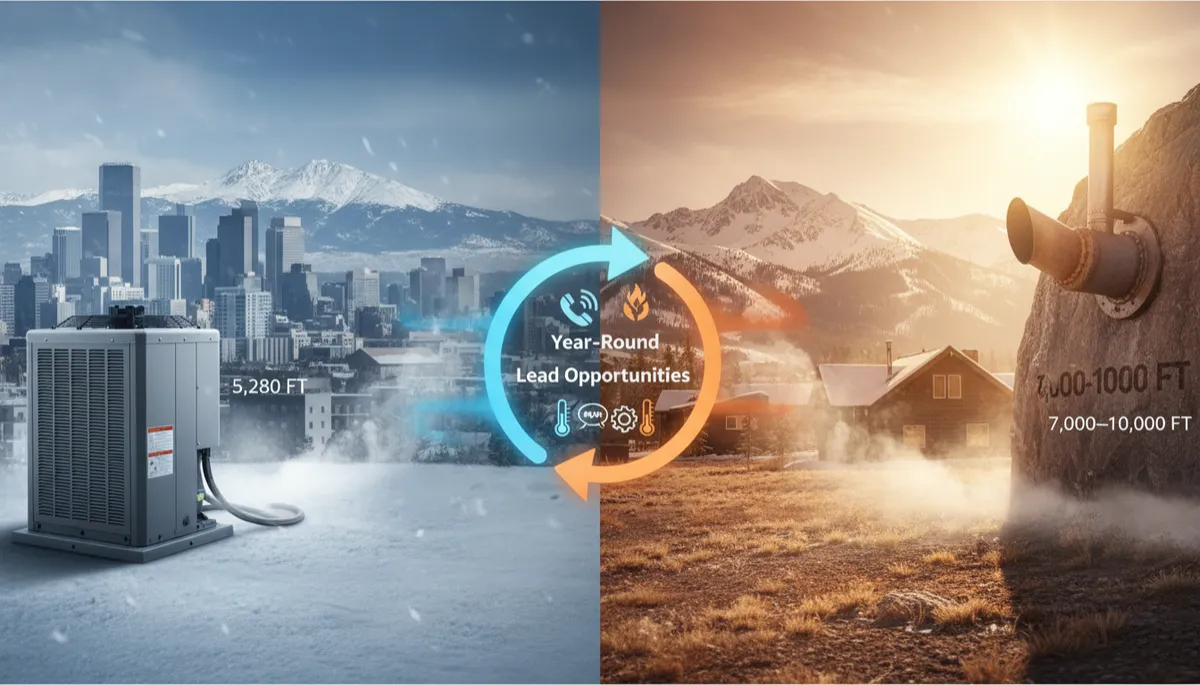
How Colorado HVAC Contractors Fill Slow Months: Off-Season Booking & Maintenance Plan Playbook
Lead Recovery, HVAC Contractors, HVAC contractors Colorado
Colorado HVAC Contractors: How Altitude and Climate Create Year-Round Lead Opportunities
Colorado’s high altitude, extreme temperature swings, and evolving energy codes mean HVAC systems work harder, fail sooner, and need more expert attention. For HVAC contractors Colorado wide, that reality should translate into steady, year-round lead flow — if you have the right strategy and the right tools to capture every call, text, and web inquiry.
Meta Description
Colorado HVAC contractors can turn altitude, climate swings, and AI tools into year-round HVAC leads and maintenance revenue across the state.
Colorado Altitude: Why Systems Work Harder at 5,000–10,000 Feet
From Denver at 5,280 feet to mountain towns at 7,000–10,000 feet, Colorado altitude HVAC performance is fundamentally different from sea level. Air is 15–20% less dense above 5,000 feet, which reduces heat transfer and forces equipment to run longer to deliver the same comfort homeowners expect.1 Furnaces and boilers must often be derated because there is less oxygen available for combustion, and fan performance changes as atmospheric pressure drops. For HVAC contractors Colorado wide, this means:
Equipment sized for sea-level assumptions can underperform or fail prematurely at altitude.
Combustion appliances may need careful tuning, derating, and code-compliant venting to stay safe and efficient.
Cooling systems must work harder to overcome reduced air density and intense solar gain from Colorado’s ~300 sunny days per year.2
These physics don’t only matter in January blizzards. They quietly shorten system life, increase wear on components, and create an underlying, year-round need for expert service, replacement, and performance upgrades across the Front Range, Western Slope, and mountain communities alike.
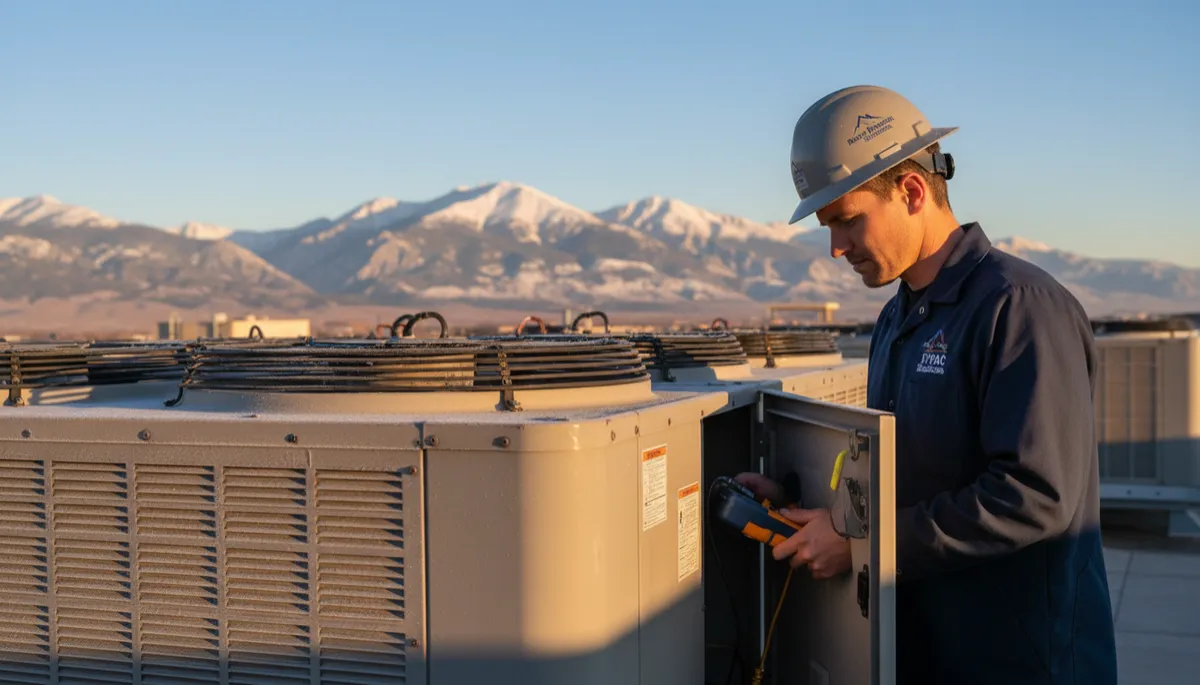
High altitude derates equipment capacity, creating more service and replacement opportunities.
Summer Cooling Demand: More Than Just a Few Hot Weeks
Many homeowners still think “Colorado doesn’t really need AC.” But HVAC contractors know better. Along the Front Range, intense solar radiation and low humidity combine to create high cooling loads, even when the air temperature is relatively mild.2 Denver and Colorado Springs frequently see daily temperature swings of 30–40°F, with afternoons that feel significantly hotter than the forecast suggests.3
The result: systems short-cycle, run for long stretches during peak sun, and often fail under stress just when homeowners need them most. For HVAC contractors Colorado wide, summer brings:
Emergency no-cool calls during heat waves, especially in older homes retrofitted with AC or heat pumps.
Opportunities to upgrade undersized condensers, add zoning, or install ductless mini-splits for bonus rooms and upper levels.
Strong demand for high-efficiency and cold-climate heat pumps, supported by state and utility incentives.4
However, a common problem emerges: while your phones ring off the hook in July, many calls are missed or sent to voicemail. Homeowners, already uncomfortable, move on to the next contractor in Google. Without a system to recover those missed opportunities, you leave high-margin summer work — and future maintenance-plan customers — on the table.
Winter Heating Emergencies at Altitude: Safety, Speed, and Trust
Winter in Colorado is unforgiving. When a furnace or heat pump fails overnight in Fort Collins, Pueblo, or Breckenridge, it is more than an inconvenience — it is a safety issue. At altitude, combustion efficiency is already stressed, and new state regulations are tightening standards even further, with ultra-low NOx and 95% AFUE furnaces required starting in 2026.5
This creates a perfect storm of winter demand:
Emergency no-heat calls during storms and cold snaps, often after hours or on weekends.
Replacement opportunities when older, non-compliant furnaces fail and must be upgraded to meet new codes.
Add-on sales such as whole-home humidifiers, IAQ solutions, and smart thermostats to combat Colorado’s extremely dry indoor air.2
Emergency service calls are some of the highest-value leads you receive all year. Yet they often hit your business at the worst possible times — overnight, during holidays, or when your office staff is already overwhelmed. If those calls roll to voicemail or sit in an overflowing inbox, another contractor gets the job, the replacement, and the long-term maintenance plan.
📌 Key Takeaway: In Colorado’s climate, emergency calls are predictable — not random. With the right lead-capture systems, you can convert more of them into profitable installs and long-term service agreements.
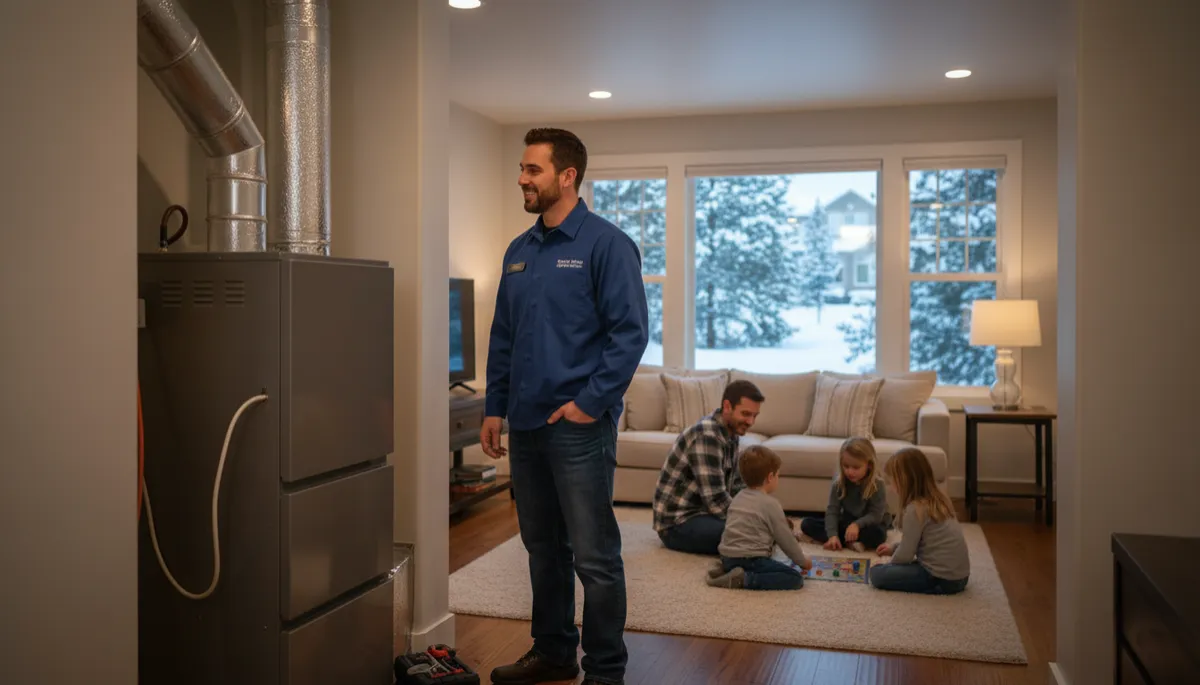
Fast response to winter emergencies often turns into full system replacements and plans.
The Real Goldmine: Shoulder-Season Maintenance and Replacement
Spring and fall in Colorado are not “dead seasons” — they are your best window for profitable, planned work. Industry data shows that replacements often peak in March–May and September–October, when weather is mild and homeowners want to avoid emergency pricing and delays.6 This is when you can:
Fill your schedule with pre-season tune-ups, safety checks, and performance diagnostics.
Replace aging systems before they fail, especially those undersized or derated for Colorado altitude HVAC conditions.
Educate homeowners on new efficiency codes, electrification-ready systems, and heat pump options.
If your business experiences “slow” shoulder seasons, it is rarely because demand does not exist. More often, the problem is missed or delayed follow-up on inbound calls, web forms, and referrals. Without a consistent way to respond instantly — even when your dispatcher is busy or the office is closed — shoulder-season leads quietly slip away to competitors who answer first.
The Core Problem: Artificial Slow Seasons from Missed Leads
In a state with year-round HVAC demand, “slow season” is usually a lead-capture problem, not a market problem. When phones are busy, staff is in the field, or your office is closed, you face three costly issues:
Missed calls from homeowners ready to book tune-ups, replacements, or emergency service.
Voicemails and web forms that sit for hours before anyone responds, giving competitors time to win the job.
After-hours calls that get a generic answering service instead of a knowledgeable, booking-focused response.
The cost is significant. Every unbooked maintenance visit is lost revenue today and a lost chance to enroll that customer into a maintenance plan, secure future replacements, and generate referrals. Over 12 months, those missed opportunities can easily equal hundreds of thousands of dollars in unrealized revenue for a busy Colorado HVAC shop.
💡 Pro Tip: Review your call logs from last shoulder season. How many calls went unanswered, after-hours, or to voicemail? That is the first place to look for “hidden” revenue. For real-world examples of recovered revenue, explore our HVAC case studies.
The Solution: AI Missed Call Text-Back and Voice AI Receptionist
Instant Business Pro’s missed call text-back and Voice AI receptionist — packaged in the Virtual Office tier — are designed to eliminate artificial slow seasons for HVAC contractors Colorado wide. Instead of relying solely on human availability, you put AI to work 24/7 to capture, qualify, and convert inbound interest into booked jobs and maintenance agreements.
How Missed Call Text-Back Works for Colorado HVAC Shops
When a call is missed, the system automatically sends a branded text within seconds, acknowledging the call and asking how you can help.
Homeowners can reply with their issue — “no heat in Evergreen,” “AC tune-up in Aurora,” “heat pump quote in Boulder” — and the AI keeps the conversation going until an appointment is booked or a callback is scheduled.
Voice AI Receptionist: Always-On, Altitude-Savvy Front Desk
Answers calls 24/7 with a professional, HVAC-specific script that reflects your brand and service area.
Gathers key details — system type, age, altitude location, urgency — and can even reference local climate realities (e.g., “those 30-degree swings in Castle Rock are hard on older furnaces”).
Books appointments directly into your calendar or dispatching workflow, so your team wakes up to a full, organized schedule.
Combined, these tools ensure that every emergency call, tune-up request, and quote inquiry is acknowledged and nurtured — even when your human office staff is off the clock or juggling multiple lines. For more on how AI fits into dispatching and operations, explore AI dispatching strategies for contractors.
ROI: Turning Altitude and Climate into Predictable Revenue
1. Shoulder-Season Revenue Captured
Imagine your Colorado shop misses just five calls per week during March–May and September–October. If AI text-back converts even half of those into booked tune-ups at $140 per visit, that is roughly:
2–3 additional visits per week, or 20–25 per shoulder season month.
$2,800–$3,500 in additional monthly revenue from work you previously lost.
Over both shoulder seasons, that easily becomes $10,000+ in incremental revenue — before you factor in replacement quotes and add-on sales discovered during those visits. For more ideas on maximizing this window, see seasonal tune-up marketing strategies, and review our HVAC case studies for proof of what’s possible.
2. Maintenance Plan Value Over 12 Months
Every tune-up visit is also a chance to enroll a homeowner into a maintenance agreement. In Colorado’s harsh climate, maintenance plans are particularly valuable — systems run harder, filters load faster due to dust and wildfire smoke, and altitude accelerates wear.3 If your average plan is worth $250–$400 per year in visits and discounts, enrolling just 10 extra customers per month through AI-captured leads can mean:
$2,500–$4,000 in recurring annual revenue added monthly.
A growing base of loyal customers who call you first for replacements and emergencies.
Over a year, that compounding effect can transform your business. For deeper strategies on structuring and selling these plans, review HVAC maintenance plan best practices for contractors, and see how similar contractors are succeeding in our case studies.
3. Altitude-Education Job Wins
Colorado homeowners increasingly hear about electrification, heat pumps, and new energy codes, but they rarely understand how altitude affects their specific home. When your AI receptionist and follow-up messaging reference real local conditions — like derating for 8,000 feet, or how 300 sunny days impact cooling loads — you differentiate yourself as the “Colorado altitude HVAC” expert, not just another installer.
That authority helps you win higher-ticket replacements, geothermal quotes, and heat pump conversions, even when your price is not the lowest.
4. Time Saved from 24/7 AI Handling
Finally, consider the internal ROI. Every minute your team spends chasing voicemails, returning missed calls, and manually confirming appointments is time not spent on higher-value work. With Virtual Office handling first contact and basic qualification, your CSRs and dispatchers can focus on:
Prioritizing true emergencies in winter storms and summer heat waves.
Coordinating crews efficiently across Colorado’s wide geography and mountain passes.
Upselling IAQ, humidification, and efficiency upgrades during inbound calls — while protecting your online reputation with strong follow-up that supports reputation management and consistent reviews.
Over time, that operational efficiency translates directly into more completed jobs per day, higher average tickets, and less burnout for your office staff — especially during winter emergency spikes, where Colorado winter HVAC emergencies can overwhelm traditional answering systems.
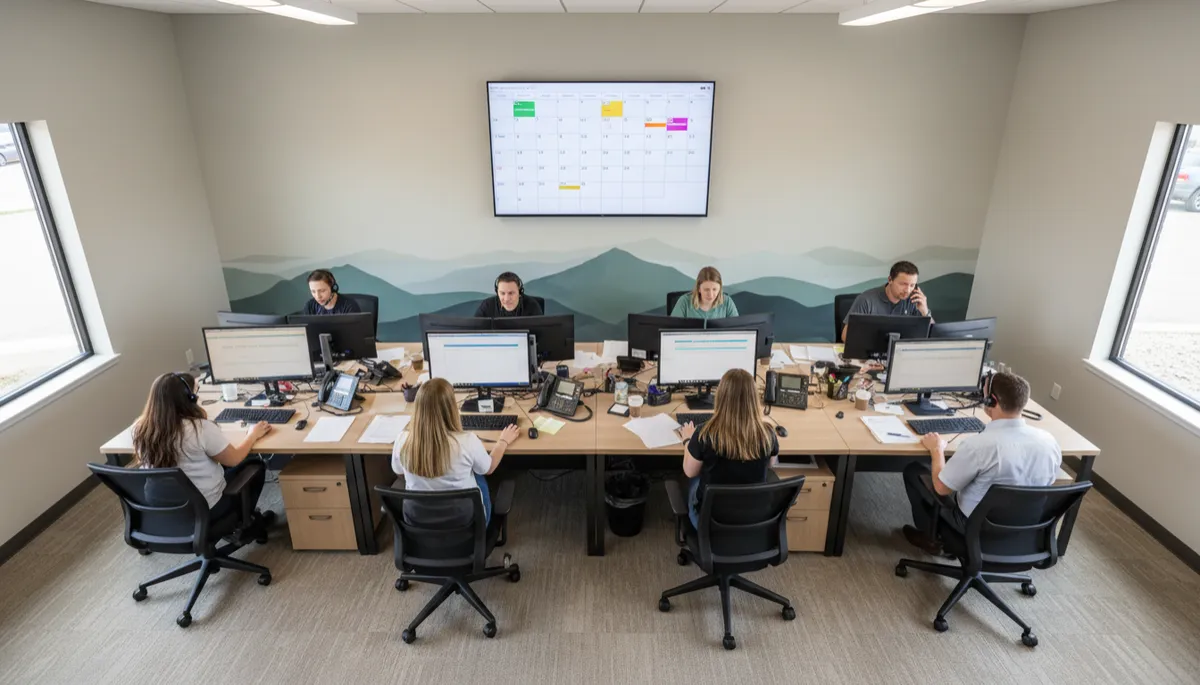
AI-powered lead capture keeps calendars full without overwhelming office staff.
Be the Contractor Who Never Has a Slow Season
Colorado’s altitude and climate already guarantee year-round HVAC demand. The question is not whether homeowners need you — it is whether they reach you first and receive a fast, professional response every time they call, text, or submit a form. Contractors who still operate with peak-only marketing and voicemail-based lead capture will continue to ride the roller coaster of busy winters, frantic summers, and “mysteriously” slow shoulder seasons.
Contractors who pair altitude-savvy expertise with AI-powered lead recovery, on the other hand, can build a business with:
Fuller schedules in March, April, September, and October — when installations are easier and more profitable.
A growing base of maintenance-plan members who rely on you year after year.
Stronger conversion on emergency calls and higher-value replacement opportunities, supported by smart emergency service marketing.
If you are ready to turn Colorado’s unique altitude and climate into a competitive advantage — and finally eliminate artificial slow seasons — explore how Instant Business Pro’s Virtual Office tier, with missed call text-back and Voice AI receptionist, can fit into your operation. Visit https://instantbusinesspro.ai to see how leading HVAC contractors Colorado wide are modernizing their lead capture and building steadier, more profitable businesses, and contact us to talk through what this could look like for your team.
