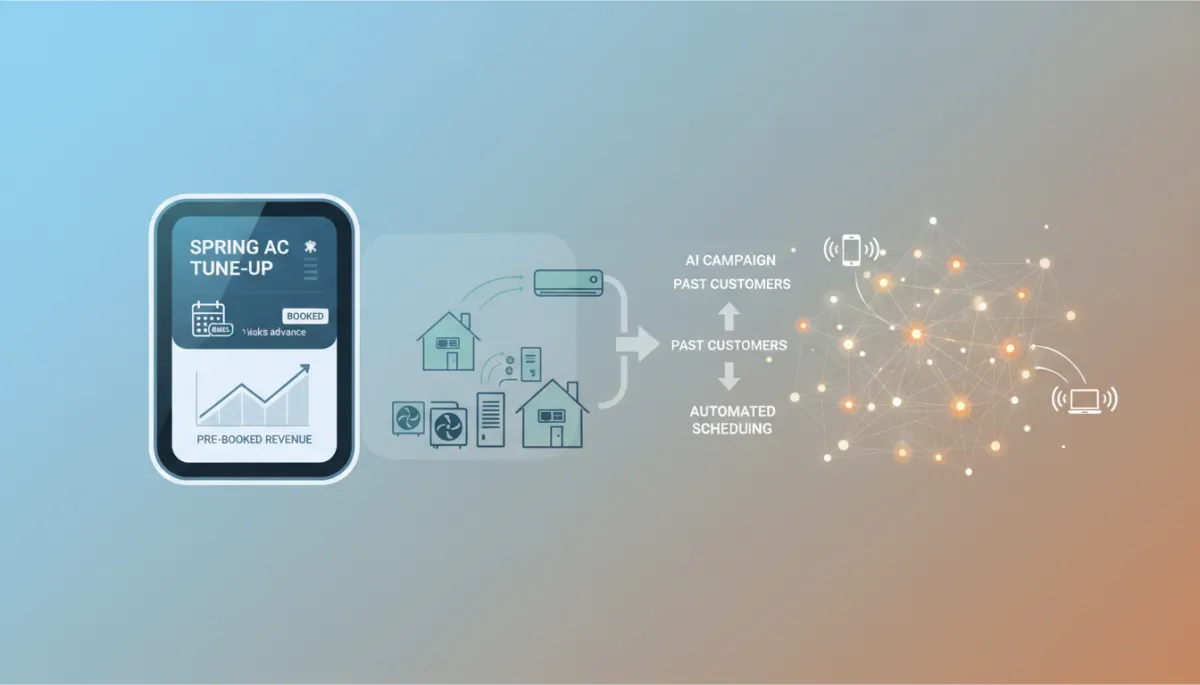
AI-Powered HVAC Seasonal Tune-Up Campaigns
HVAC Marketing, HVAC AI Marketing, HVAC Seasonal Tune-Up Campaigns
HVAC Seasonal Tune-Up Campaigns: Using AI to Pre-Book Spring and Fall Service Calls
As a senior software engineer working with HVAC contractors, I see the same pattern every year: phones explode when the first heat wave or cold snap hits, techs get buried, and high-value customers wait while competitors quietly scoop up the easy jobs. AI-powered HVAC seasonal tune-up campaigns change that dynamic by pre-booking spring AC tune-ups and fall furnace check-ups weeks in advance—locking in revenue before peak demand even starts.
Why Do Most HVAC Contractors Wait for the Phone to Ring Each Season?
If your team is like most HVAC shops, your spring and fall playbook looks like this:
You send one generic email—if that—reminding customers about maintenance.
Then you wait for the first 90°F day or the first freezing night.
The phones blow up, dispatch scrambles, and techs run from call to call.
From a technical perspective, this is a classic reactive queue problem. Demand spikes all at once, and because your capacity (number of techs, drive time, hours in a day) is fixed, customers experience long wait times. Many simply call the next company that can “come today,” regardless of price or relationship.
💡 Pro Tip: If your team is routinely booking 3–5 days out during the first heat wave or cold snap, you are operating reactively and leaving money—and customer goodwill—on the table.
What Does Reactive Peak-Season Scheduling Really Cost Your HVAC Business?
From the outside, a slammed schedule looks like a good problem to have. Under the hood, the math tells a different story. When you rely on last-minute calls instead of HVAC seasonal tune-up campaigns, three costs stack up quickly:
Lost jobs to faster competitors. Customers in discomfort rarely wait. If you can’t get there within 24–48 hours, they Google another company. Whoever can come soonest often wins, even if they charge more.
Lower margins on rushed service. Rushed diagnostics, extra windshield time, and overtime pay eat into profit. Techs may skip add-on recommendations because they are behind schedule, reducing ticket size.
Burned-out techs and higher turnover. Weeks of 10–12 hour days in extreme weather push even great technicians to their limit. Burnout leads to turnover, which is expensive and slows growth.
Meanwhile, proactive competitors who pre-book HVAC service calls with spring and fall tune-ups are fully scheduled with predictable, profitable jobs. Their techs work steady hours, their dispatchers are calm, and their marketing budget is already paid back before the season begins.
📌 Key Takeaway: Reactive scheduling doesn’t just create stress—it quietly transfers jobs, margin, and technicians to the contractors who plan ahead.
How Do AI-Powered HVAC Seasonal Tune-Up Campaigns Work in Practice?
Modern HVAC AI marketing tools make proactive outreach almost fully automated. The core idea is simple: use AI to run HVAC spring and fall campaigns 6–8 weeks before temperatures swing, reaching past customers via SMS and email, handling replies, and booking tune-ups directly into your calendar.
With a platform like Instant Business Pro (IBP), the workflow looks like this:
You define your spring AC tune-up and fall furnace check-up offers once (e.g., $149 tune-up, filter included).
IBP segments your customer list: past AC installs, maintenance plan members, “no service in 18+ months,” etc. using AI-driven customer segmentation.
The AI generates personalized SMS and email messages based on each segment’s history and preferences.
The IBP AI Receptionist and lead nurturing tools respond to replies 24/7, answer common questions, and offer time slots pulled from your actual calendar.
Instead of “Call us to schedule,” your customers receive a concise, tap-to-book style message that clearly explains the offer, lists a few available time slots, and lets them confirm with a single reply. The AI then handles the back-and-forth, confirms the appointment, and adds it to your calendar automatically.
When the customer chooses a time, the AI confirms, updates your calendar, and sends reminders—no human coordination required. This is what turns a marketing campaign into a pre-book HVAC service calls engine.
How Does the AI Receptionist Handle Missed Calls and Late Responders?
Even with great seasonal campaigns, people will still call your office. The difference with an AI-powered stack is that you no longer lose those opportunities when you are on another line or on a roof. Using the IBP Missed Call Text-Back feature, every missed call triggers an automatic text within seconds.
In IBP, this logic is already wired up behind the scenes. You do not have to code anything; you simply configure your preferences inside the dashboard. But as an engineer, I want you to appreciate that under the hood the AI is:
Classifying intent (tune-up vs. emergency vs. quote).
Pulling live availability from your connected calendar.
Booking or escalating based on your rules and IBP tier (Starter, Growth, or Pro).
Combined with IBP’s AI lead nurturing workflows, late responders to your HVAC seasonal tune-up campaigns are automatically followed up with over days or weeks—without your office staff chasing them manually.
What ROI Can You Expect from Pre-Booked Spring and Fall Tune-Ups?
Let’s talk numbers, because this is where HVAC AI marketing really earns its keep. We will stay conservative and focus only on tune-up revenue, not the additional repair or replacement work these visits often uncover.
Baseline Seasonal Math
Assume your company runs:
Spring AC tune-up offer: $150 per visit.
Fall furnace check-up: also $150 per visit.
With AI-driven HVAC seasonal tune-up campaigns, it is realistic to pre-book at least:
150 spring tune-ups at $150 each = $22,500 in pre-season revenue.
150 fall tune-ups at $150 each = another $22,500.
That is $45,000 in predictable, scheduled revenue before the first major weather event of each season. Many IBP users see higher numbers once they dial in their messaging and segmentation.
Revenue Per Tech and Upside from Add-Ons
Now map that to technician capacity. Suppose:
Each tech can comfortably perform 4 tune-ups per day in the shoulder season (with reasonable drive time).
You have 3 techs dedicated part-time to pre-season maintenance for 3 weeks.
That is:
3 techs × 4 tune-ups/day × 15 days = 180 tune-ups capacity per season.
With 150 of those slots pre-booked by AI campaigns, you are running at 83% of your planned capacity before the season even begins. The remaining slots can be reserved for last-minute calls or higher-ticket work.
💡 Upsell Reality: Many contractors report that 10–20% of tune-ups uncover additional work—capacitors, contactors, duct issues, or even system replacements. Your $45,000 in tune-ups can easily lead to $100,000+ in total seasonal revenue.
Against that backdrop, the investment in an AI-powered platform like IBP—whether you are on the Starter, Growth, or Pro tier—is typically recovered within the first few weeks of one season’s campaign.
How Do Seasonal AI Campaigns Play Out in Colorado’s Front Range Climate?
Colorado is a perfect case study for HVAC spring and fall campaigns. The Front Range is known for sharp temperature swings—snow in April, 80°F days in May, and triple-digit heat in July. Forecasts for 2026 point to a hotter-than-normal summer with increased monsoon activity, especially from July through September, and above-average temperatures from May through October across much of the state (Cited from CPR and regional outlooks).
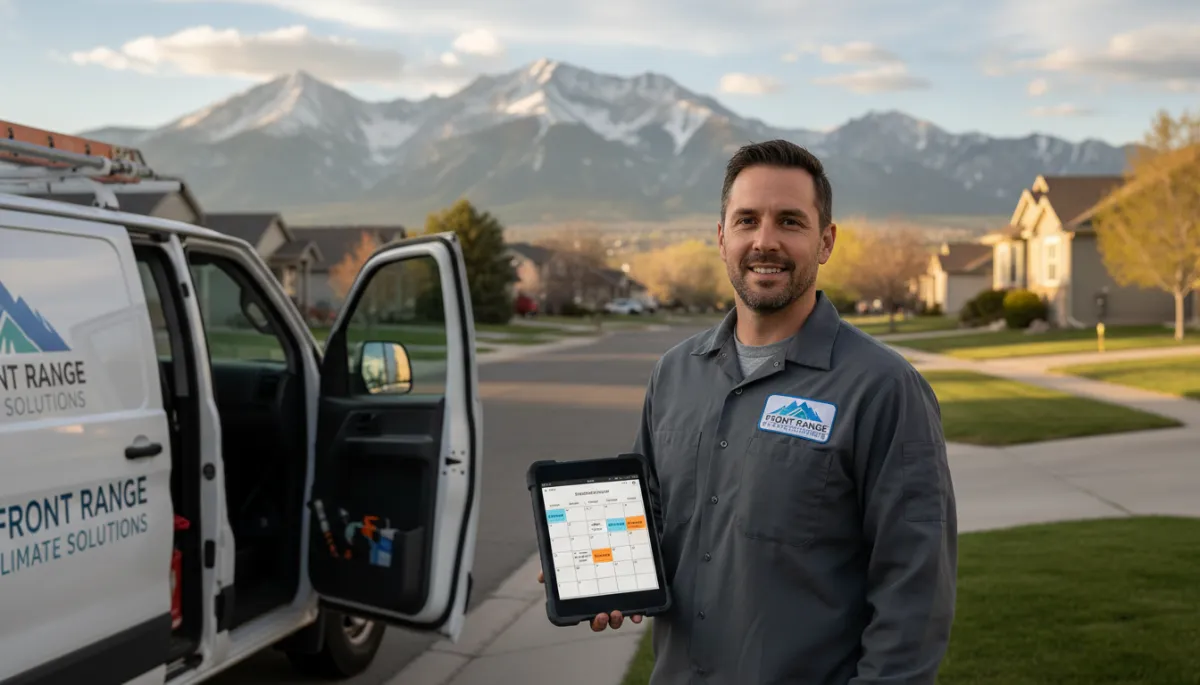
Front Range contractors who pre-book tune-ups avoid chaos when temperatures swing suddenly.
For a Denver-area contractor, AI-driven campaigns can be timed to local patterns:
Spring AC tune-ups: Launch campaigns in early March, targeting March–April appointments before May–June demand spikes. This lines up with guidance that early spring maintenance prevents costly summer breakdowns in hotter, less predictable cooling seasons.
Fall furnace check-ups: Launch in late August or early September, filling October–November with maintenance before the first extended cold spell.
Because equipment sizing and performance are affected by altitude, many Colorado systems run closer to their limits than sea-level counterparts. That amplifies the value of pre-season maintenance: clean coils, proper refrigerant charge, and combustion checks make the difference between “barely keeping up” and “no heat” calls on the coldest days.
📌 Colorado Insight: With heat pump adoption surging and new regulations on furnaces and refrigerants, your customers will need more education. AI campaigns can automatically send tailored messages about rebates, new efficiency standards, and when to replace versus repair—without adding workload to your office.
How Do You Actually Set Up AI Seasonal Campaigns with IBP?
From a technical implementation standpoint, IBP is designed so you do not have to be a developer to benefit from AI. But it helps to understand the building blocks so you can ask the right questions and configure it intelligently.
1. Connect Your Data Sources
Import your customer list from your CRM or invoicing system (names, addresses, install dates, last service date, equipment type).
Connect your calendar (Google, Outlook, or your scheduling tool) so the AI can offer real-time availability.
2. Define Segments and Triggers
Inside IBP, you can create segments like:
no_service_in_18_months– lapsed customers who are overdue for maintenance.maintenance_plan_members– active members who should be pre-scheduled automatically.
Then you define triggers.
In IBP, this is managed through a visual workflow builder, but the underlying logic is the same: “On this date, send this campaign to this segment via these channels.”
3. Let the AI Handle Conversations and Nurture
Once the campaign is live, IBP’s AI Receptionist and lead nurturing engine:
Answers common questions (pricing, what’s included, how long it takes).
Offers appointment slots based on your rules (e.g., mornings only for maintenance).
Sends confirmations and reminders, reducing no-shows.
For leads that do not book right away, IBP can automatically send follow-up messages over several days, gently nudging them to schedule. You can learn more about how this works across channels on the main Instant Business Pro site and related pages like the Missed Call Text-Back overview.
What Outcomes Can You Expect from AI-Driven HVAC Spring and Fall Campaigns?
When you consistently run AI-powered HVAC seasonal tune-up campaigns, a few outcomes become standard rather than exceptional:
A full spring and fall calendar before the rush. Your dispatch board shows clean, optimized days weeks in advance, not last-minute chaos. Techs know where they are going and what they are doing.
Higher revenue per tech. With less windshield time and better routing, each technician can complete more work at higher average ticket values, especially when tune-ups uncover additional issues.
Stronger customer relationships. Customers feel taken care of when you reach out before problems hit. Proactive outreach positions you as their trusted advisor, not just another company they call in a panic.
💡 Customer Experience Win: When your AI receptionist texts a customer seconds after a missed call and offers tune-up times without any hold music, it feels like concierge service—even though it is fully automated.
How Can Your HVAC Company Get Started with AI Seasonal Tune-Up Campaigns?
You do not need to rebuild your tech stack or hire developers to benefit from HVAC AI marketing. A practical starting path looks like this:
Pick one season to test. If you are heading into warmer months, start with a spring AC tune-up campaign. If fall is around the corner, start there instead.
Connect IBP to your existing tools. Sync your contacts and calendar so the AI can handle real bookings. Explore the capabilities of the IBP Starter, Growth, and Pro tiers to match your size and call volume.
Launch a simple, well-defined offer. One clear price, one clear service (AC tune-up or furnace check-up), and a limited number of spots create urgency and make it easy for the AI to explain.
From there, you can layer in more advanced capabilities—multi-step nurturing sequences, cross-selling maintenance plans, or educating customers about new high-efficiency systems and rebates—without increasing your office workload. Additional resources on AI reception, follow-up, and automation flows are available throughout the Instant Business Pro site.
Final Thoughts: Turn Weather Swings into Predictable Revenue with AI
Seasonal temperature swings are not going away—especially in markets like Colorado’s Front Range, where 40°F swings in a single day are common. The question is whether those swings create chaos in your business or predictable, pre-booked work for your team.
By shifting from reactive scheduling to AI-powered HVAC seasonal tune-up campaigns, you can:
Fill your spring and fall calendars weeks before peak demand hits.
Lock in tens of thousands of dollars in revenue per season before competitors even start marketing.
Protect your techs from burnout while increasing revenue per truck.
If you are ready to see how AI campaigns, an AI receptionist, and automated lead nurturing can work together in your specific market, take a few minutes to explore Instant Business Pro and the Missed Call Text-Back feature. A short setup today can mean a full, calm, and profitable schedule next season—before the first heat wave or cold snap even shows up in the forecast.
