5 Signs Your Plumbing Business Is Losing Revenue to Slow Follow-Up
5 Signs Your Plumbing Business Is Losing Revenue to Slow Follow-Up
Plumbing is one of the most demand-driven trades in the contracting world. When something breaks — a pipe bursts at 2am, a water heater fails on a Sunday morning, a sewer backs up during dinner — the homeowner is not browsing casually or weighing options. They need help right now. They pick up the phone and call whoever comes up first on Google, whoever a neighbor recommended, or whoever they have used before.
That urgency is the good news for Colorado plumbing businesses. The demand is real, the intent is high, and customers who call are almost always ready to hire on the spot.
The bad news is that this same urgency works directly against you the moment you miss a call, respond slowly, or fail to follow up consistently. In plumbing, slow response does not mean a delayed sale. It means no sale. The customer called someone else ten minutes after you did not answer, and they already have a technician booked by the time you return the voicemail.
The typical plumbing contractor loses approximately $125,000 per year to unanswered calls, according to ServiceTitan industry benchmark data. For larger operations, that figure can exceed $300,000. Between advertising, SEO, and lead services, acquiring a single plumbing lead costs $150 to $300. Losing that lead because nobody answered is one of the most expensive mistakes a plumbing business makes repeatedly without ever seeing it on a report.
Here are five signs your plumbing business is losing more revenue than you realize to slow follow-up — and what to do about each one.
Sign 1: You Are Getting Calls but Your Conversion Rate Does Not Reflect It
If you are consistently generating inbound calls but feel like your booking rate does not match the volume, slow follow-up is almost always part of the explanation.
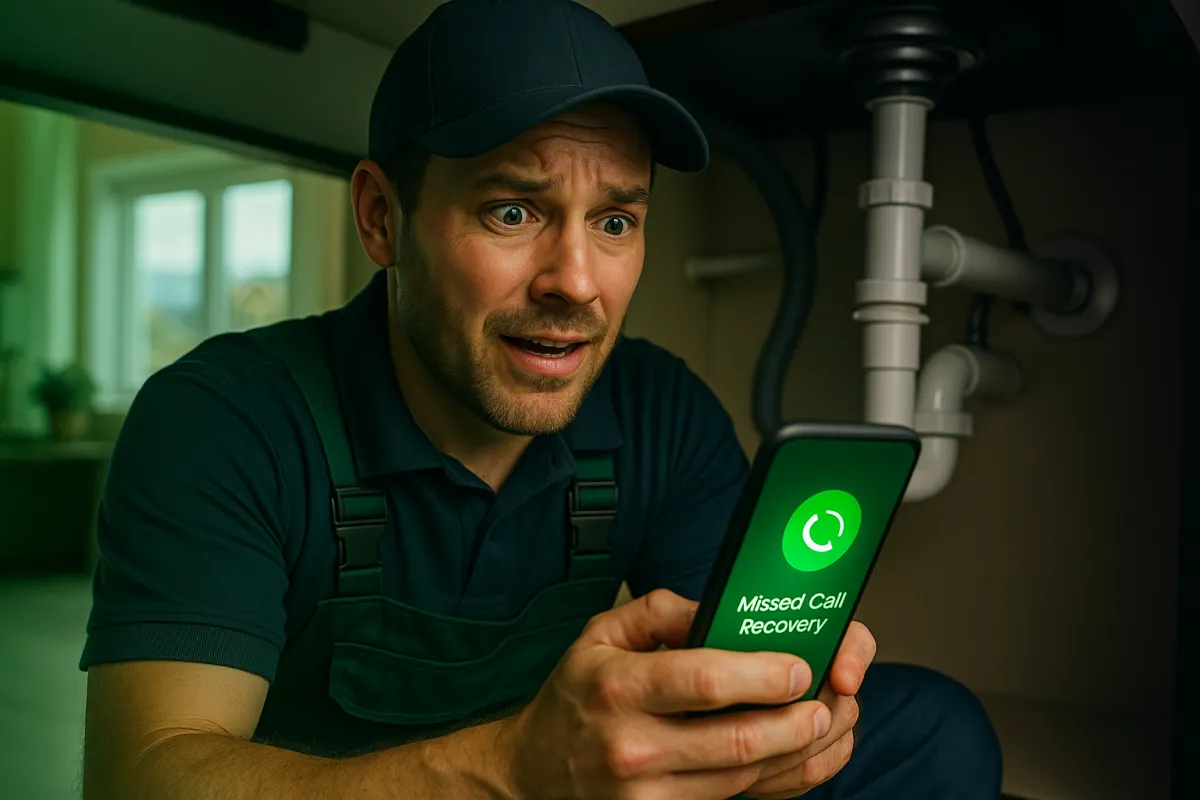
The math is straightforward. Plumbing businesses miss between 27 and 40% of incoming calls on average because technicians are physically under houses, in crawl spaces, or under sinks where answering a phone is not possible. Of those missed calls, 85% of callers will not call back or leave a message. They move immediately to the next plumber in their search results.
So before any conversation has happened, before any price comparison or service review, you have already lost a significant portion of the leads your marketing generated. The customers who do get through are the ones who happened to call at the right moment. The ones who called during a job, at lunch, or after hours — gone.
The gap between your monthly call volume and your booked jobs is a diagnostic tool. If that gap is wider than your pricing and quality would suggest, the problem is happening at the very first point of contact. It is not your reputation. It is not your prices. It is the phone going unanswered.
We cover the full revenue math in our post on the real cost of missed calls for Colorado contractors. The numbers are more significant than most plumbing business owners expect before they actually run them.
Sign 2: Customers Mention They Called Several Places
Pay close attention to how customers phrase their introduction when they do reach you. When someone says "I have been trying to reach a plumber for the last hour" or "I called a few places before I got through to you," they are telling you exactly what happened. You were not their first successful contact. You were their fallback.
That is not a position you want to occupy, even if you win the job.
Customers who reach you as a fallback are in a different emotional state than customers who reach you first. They are often relieved but not impressed. They may be more likely to price-compare because they have had time to look around. They are less likely to become loyal long-term customers who refer their neighbors and call you directly next time.
Customers who reach you first and receive an immediate, professional response are experiencing something completely different. They feel relief. They feel taken care of. That first interaction sets the foundation for the entire relationship.
The difference between being the first responder and the fallback often comes down to minutes. In emergency plumbing situations, the first contractor to respond wins the job 78% of the time. Not the cheapest. Not the closest. The fastest. We covered why this dynamic plays out across all home services trades in our post on how Colorado contractors are booking 3x more jobs with instant response.
Sign 3: Your Voicemail Is Functioning as a Dead End
Think about the last time you reached a business's voicemail during an emergency and actually left a message. Now think about how long you waited for a callback before calling someone else.
Only 18% of people listen to voicemails from numbers they do not recognize. 67% of people admit they ignore voicemails entirely, even from known contacts. For someone with water flooding their basement, the idea of leaving a voicemail and waiting for a callback the next business day is not a reassuring outcome. It is a signal to keep dialing.
Voicemail is a dead end without an immediate alternative. An automated follow-up system that sends a personalized text within 60 seconds of a missed call transforms that moment entirely. Instead of leaving a customer with silence, you give them an immediate touchpoint. A message that says your business received their call, you care about their situation, and help is on the way. That single shift from dead-end voicemail to instant text engagement is what separates plumbing businesses that consistently win emergency calls from those that consistently lose them to faster-responding competitors.
Our post on what missed call text back is and how it works for Colorado contractors breaks down exactly how that system works and what an effective message looks like for plumbing businesses specifically.
Sign 4: You Are Losing Disproportionate Business on Evenings and Weekends
62% of plumbing-related calls occur outside traditional business hours — evenings, weekends, and holidays — according to IBISWorld industry analysis. That is not a small after-hours fringe. That is the majority of your inbound call volume happening when most plumbing businesses have zero live coverage.
The economics of these calls make the timing even more consequential. Emergency plumbing services command 1.5 to 2 times standard pricing. An after-hours burst pipe call in Denver or Colorado Springs generates $450 to $600 at minimum, often significantly more for complex repairs. The typical plumbing business in Colorado receives 8 to 12 after-hours emergency calls per week. At a 95% voicemail abandonment rate, most of those calls are being lost entirely every single week.
One Colorado plumbing operation discovered it had been sleeping through roughly $13,000 per month in emergency revenue before implementing an after-hours response system. That is not a calculation from a marketing pitch. That is what happens when you run the math on missed call volume, abandonment rate, and average emergency job value.
This does not require you to personally be available at all hours. It requires your system to be. An AI follow-up system does not sleep, does not take weekends off, and does not stop engaging leads after 5pm. Every call that comes in outside of business hours receives the same instant, professional response as a call that comes in at 10am on a Tuesday.
For Colorado plumbing businesses in competitive markets like the Denver metro, weekend and after-hours responsiveness is a genuine differentiator. If you are the only plumber in your service area responding to a 9pm Sunday burst pipe call, you are not just winning one job. You are building a reputation that generates positive reviews, repeat customers, and referrals that your competitors are not capturing.
If you are comparing the cost of after-hours AI coverage against the alternatives, our post on AI automation versus an answering service versus hiring a receptionist lays out the full cost picture for Colorado contractors.
Sign 5: You Do Not Have a Documented Follow-Up System
This is the root cause behind all four of the signs above, and it is the most important one to address.
Most plumbing businesses — especially owner-operated ones — handle lead follow-up entirely informally. You try to call everyone back when you have a moment between jobs. There is no defined timeframe for returning calls. No sequence for following up if someone does not answer the first time back. No system for tracking which leads have been contacted and which have not. Nothing documented that would allow a new hire or dispatcher to execute follow-up the same way you would.
This is not a criticism of how plumbing businesses operate. It is the natural state of a business that grew from referrals and reputation and has not had to formalize its systems yet. But informal follow-up has a ceiling. There is a volume of leads above which the informal approach starts losing business reliably, and that ceiling is lower than most contractors expect.
Between 70 and 80% of plumbing service calls qualify as urgent, according to BDR industry data. Urgent customers do not wait for informal follow-up. They make a decision and move on within minutes of the original call. If your process relies on someone remembering to call back during a break, your urgent customers are gone before that break arrives.
Building a documented follow-up system does not require sophisticated software or a full administrative team. It requires clarity about what happens at each stage. When a call comes in and goes unanswered, what fires automatically within 60 seconds? When a customer texts back, what is the next step and who handles it? When a job is completed, how does the review request get sent and when? Automation handles all of these stages consistently, at the exact right moment, without relying on memory, available time, or a team member who had a long day.
Our post on automating the complete contractor lead journey from the first contact to the five-star review maps out exactly what a documented system looks like across every stage for plumbing and home service businesses.
Frequently Asked Questions: Plumbing Business Follow-Up and Missed Calls
How much revenue do plumbing contractors lose to missed calls each year?
The typical plumbing contractor loses approximately $125,000 per year to unanswered calls, according to ServiceTitan industry benchmark data. For larger plumbing operations, the figure can exceed $300,000. Data from over 1,200 contractors across plumbing, HVAC, electrical, and general contracting shows the average small contracting business loses $45,000 to $120,000 per year from missed calls and slow follow-up.
What percentage of plumbing calls come in after business hours?
62% of plumbing-related calls occur outside traditional business hours, including evenings, weekends, and holidays, according to IBISWorld industry analysis. The typical plumbing business receives 8 to 12 after-hours emergency calls per week. Emergency plumbing calls command 1.5 to 2 times standard pricing, making after-hours response one of the highest-value opportunities a plumbing business can capture.
Why don't plumbing customers leave voicemails?
Only 18% of people listen to voicemails from unknown numbers, and 67% of people admit they ignore voicemails entirely even from known contacts. For a homeowner dealing with a plumbing emergency, the situation is actively getting worse while they wait. Research consistently shows that 80 to 95% of callers who reach voicemail during a plumbing emergency simply call the next contractor on their list rather than leave a message and wait.
What is the first responder advantage in plumbing?
In emergency plumbing situations, the first contractor to respond wins the job 78% of the time, regardless of pricing or reviews. Responding to a lead within 5 minutes makes a plumbing contractor 8 times more likely to convert that call compared to responding after 30 minutes. After 30 minutes, the odds of converting a plumbing lead drop below 10% because the homeowner has already booked with someone who responded faster.
What is a documented follow-up system for a plumbing business?
A documented follow-up system defines exactly what happens at each stage after a lead comes in. When a call goes unanswered, an automated text fires within 60 seconds. When a customer responds, the conversation routes to the right team member immediately. When a job is completed, a review request is sent automatically within 24 hours. The system executes every step consistently without relying on memory or available time from the owner or technicians.
How do I stop losing plumbing leads to competitors who respond faster?
The most direct solution is a missed call text back system that fires an automated, personalized SMS within 60 seconds of every unanswered call, combined with a follow-up sequence for leads who do not respond to the initial text. This ensures every lead receives an immediate, professional response regardless of when they call or whether a technician is available to answer. For after-hours and weekend coverage, a 24/7 AI system eliminates the gap entirely.
The Revenue Is Already There. The System Just Needs to Capture It.
Every missed call from a Colorado homeowner with a plumbing problem is a customer who was ready to hire you. The job was not lost to a better competitor with lower prices or more reviews. It was lost because the timing of their call did not align with your availability, and no system existed to bridge that gap.
The revenue those leads represent is already being generated by your marketing, your reputation, and your position in Google search results. The only question is whether your follow-up system is capturing it or handing it to whoever answers their phone fastest.
At Instant Business Pro, we help Colorado plumbing contractors build automated follow-up systems that respond to every lead instantly, operate 24 hours a day, and require minimal ongoing management. If you are ready to stop losing emergency calls to competitors who simply answered the phone, reach out today and let us show you exactly what that system looks like for your business.
