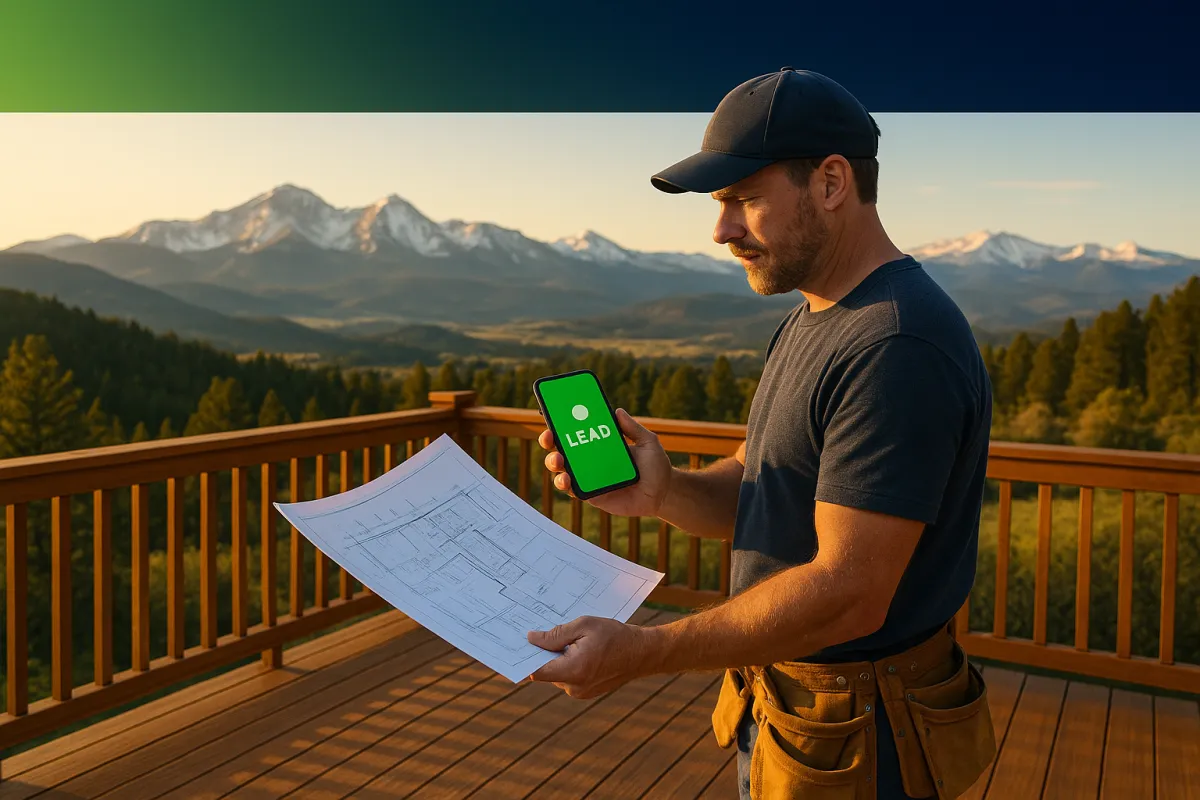
Book More Summer Deck Projects Without Chasing Every Lead: The Colorado Deck Builder's Guide to AI Automation
Colorado Deck Builders: Stop Losing Summer Leads to the Follow-Up Gap
There is a very specific kind of phone call that Colorado deck builders dread. It's May. The snow has finally cleared from the high country, the nights are getting warm, and a homeowner who's been thinking about adding a deck since January finally calls to get a quote. You don't answer — you're mid-build on a project that started three weeks ago. They leave a voicemail.
You get back to them on Thursday. They tell you they already went with someone else.
That call, multiplied across a busy spring and summer, is the silent revenue leak that keeps many Colorado deck builders from reaching the growth ceiling they're capable of hitting. The work is there. The demand is real. The limiting factor is the gap between when homeowners reach out and when you respond.
This post is about closing that gap — and making sure your best season yet isn't limited by the calls you couldn't catch.
Understanding the Summer Deck Season Window
Deck building in Colorado follows a tighter seasonal window than most homeowners — or even most contractors — fully appreciate. The combination of elevation, weather variability, and HOA review timelines in many Colorado communities means the practical window for breaking ground on a new deck project is shorter than it looks on the calendar.
In most Colorado Front Range communities, meaningful outdoor construction season runs from mid-April through September — roughly five months. Factor in permit processing times, material lead times, and the scheduling reality that the best deck contractors are booked out several weeks in advance at peak season, and the effective window for a homeowner to start a project and have it completed before fall narrows quickly.
What this means for your business is that leads that come in during April and May are some of the highest-value leads of the year. A homeowner who reaches out in April is trying to have a deck by summer. They're motivated, they have a timeline, and they're making decisions now. If you don't respond quickly, they're not going to wait for you — they're going to find someone who can confirm availability and start the process immediately. The spring preparation window is exactly the right time to get your lead system dialed in — before the phones start ringing at volume.
Why Deck Leads Are Warm Leads That Need Fast Nurturing
Unlike emergency service calls — where the urgency is immediate and visceral — deck project leads exist in a different emotional space. The homeowner has been thinking about this for a while. They've probably been looking at design inspiration, thinking about what they want, calculating roughly what they're willing to spend. By the time they call you, they're not impulsive — they're ready.
That readiness is a gift, but it's fragile. A homeowner who doesn't hear back from you within a few hours starts second-guessing whether they should be calling you at all. They start looking at other contractors. They read reviews they hadn't looked at before. The momentum of their decision-making shifts away from you simply because you weren't there at the moment their energy was highest.
Speed of response doesn't just increase your chances of winning a deck project — it catches the lead at the peak of their motivation. A contractor who responds within minutes arrives into a conversation with a customer who is enthusiastic and committed. A contractor who responds the next day arrives into a conversation with a customer who has already mentally moved on, or is juggling multiple competing quotes.
The speed-to-lead data is clear: the first contractor to make meaningful contact wins the job at a disproportionately high rate — across all contractor trades. Deck building is no exception.
The Follow-Up Gap Most Deck Builders Have
Let's be honest about the operational reality of running a deck building business during peak season. You're managing active builds. You're sourcing materials. You're dealing with inspections, subcontractors, permit offices, and clients who have questions about their projects in progress. Your phone is constantly buzzing, and not every buzz is a new lead — many are existing clients, suppliers, and crew members who need your attention right now.
In that environment, a new lead voicemail — someone asking about getting a quote for a project that might start in six weeks — doesn't always feel urgent. It gets pushed to I'll call them back after I handle this. And after I handle this sometimes becomes the next day. And sometimes the next day becomes too late.
This isn't a character flaw. It's a systems problem. And the revenue impact of those missed and delayed responses adds up faster than most contractors expect. Your follow-up process relies entirely on your personal bandwidth, which is exactly the resource that gets most compressed during the season when follow-up matters most.
An AI follow-up system solves this structural problem by removing your personal bandwidth from the equation. When a lead calls and you can't answer, the system responds immediately — regardless of what you're doing, where you are, or how full your plate is. The lead is engaged, their information is captured, and the ball is in their court while you finish what you're working on. Nothing falls through the cracks. No lead is lost to a busy day.
What Automation Looks Like for a Deck Business
For a deck building company, a well-configured AI follow-up system does several specific things that directly impact revenue.
When a homeowner calls about a project, the system sends an immediate text that acknowledges their inquiry and asks a few key questions: what type of deck they're considering, the approximate square footage, whether they have a target start date, and the best way to reach them. This is a brief, conversational exchange that feels like your business is paying attention and wants to understand their project. The same technology that handles after-hours calls for contractors handles the in-field gaps during your busiest season — and it works the same way whether you miss a call at 9 PM or 2 PM on a job site.
By the time you call them back, you're not starting a discovery conversation from zero. You know what they want, roughly what the scope looks like, and whether the timeline works for your schedule. The callback becomes a relationship conversation rather than an intake call — you can lead with enthusiasm about their project, share relevant experience, and start building the trust that wins jobs. That kind of fast, attentive response actually builds more trust than a slow personal callback — the psychology of responsiveness works in your favor when the system is set up correctly.
The system also handles follow-up for leads who don't immediately respond or who go quiet after an initial conversation. A single, well-timed follow-up message a day or two later — something like just wanted to check in to see if you had any questions about getting started on your project — recovers a meaningful percentage of leads who got busy and simply forgot to follow up. That gentle nudge, sent automatically, costs you nothing and recovers jobs that would otherwise have quietly disappeared.
The contractors who have the best summers are the ones who plan for them in the spring. Not just their build schedule — their lead capture system, their quote process, their material sourcing, and their customer communication all get set up before the volume hits. The spring prep checklist every contractor should be working through right now includes your follow-up system as a core item — not an afterthought once you're already slammed.
For deck builders specifically, April is the perfect time to get your AI follow-up system configured and tested. You want to walk into May — when the calls start coming in volume — with a system that's already proven and running smoothly. That means you're not losing leads during the setup learning curve, and you're not scrambling to fix problems while you're already slammed with projects.
Think about what a full summer of captured leads looks like for your business. Every call that would have gone to voicemail and never come back — answered instantly. Every motivated homeowner who needed to know someone was paying attention — engaged. Every project that would have gone to a competitor because you were too busy to call back in time — yours instead.
If you're still weighing whether AI automation is right for your business, the most common questions contractors ask before getting started — and honest answers to all of them — are worth reading before you decide. And if you want the full picture of how the automation system works across all four pillars of lead capture and follow-up, the complete 2026 contractor automation guide covers it in detail.
At Instant Business Pro, we help Colorado deck builders build the lead capture and follow-up systems that make great summers possible. We understand the seasonal dynamics of outdoor construction in Colorado, the decision timeline of deck project buyers, and what it takes to convert a motivated lead into a signed contract. We also tailor automation specifically for decking contractors as part of our broader home services support.
Don't let another summer season pass with leads falling through the cracks. Reach out today and let's build your system before the calls start coming in. Your best summer yet is closer than you think. To see how the numbers pencil out for your business, try our ROI calculator before you get started.
Ready to see what this is costing your business?
IBP builds the complete AI lead response system for Colorado contractors — missed call recovery, automated follow-up, and review requests — in 14–21 days, fully managed. The IBP Revenue Calculator shows your exact opportunity in 60 seconds. Free, no sign-up needed.
